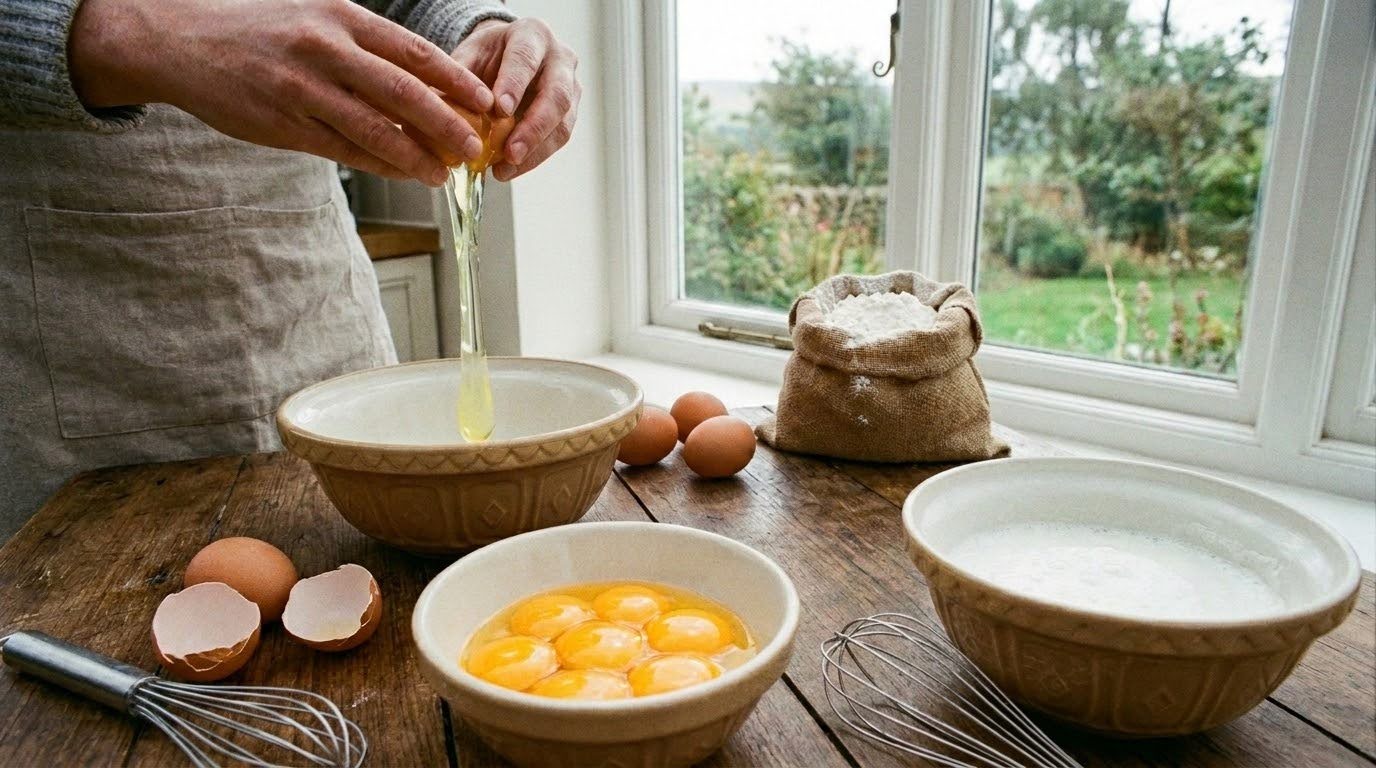
Picture this: It’s a quiet Saturday morning. You’ve had your coffee, and you’re ready to whip up a batch of pancakes. You mix all the ingredients—whether from scratch or from a favorite boxed mix—and head to the stove. However, instead of fluffy, golden pancakes, you end up with flat, dense rounds that fall apart easily. You glance back at the counter and realize you forgot to add the eggs.
Baking is a delicious form of chemistry— it’s all about precision, balance, and the right ingredients working together. Among these ingredients, eggs are perhaps the most versatile component in your kitchen. That is why starting with high-quality, farm-fresh eggs isn’t just a suggestion; it’s the foundation of a perfect bake.
Let’s crack open the different roles eggs play in your favorite recipes.
1. Structure and Binding: The “Glue” of Your Recipe
Think of eggs as the scaffolding of a building. They provide the essential structure for your baked goods, binding all the ingredients together. Without eggs, your cakes would crumble, and your cookies would ooze into a greasy mess on the baking tray.
The Science: This binding occurs through a process called coagulation. When eggs are in liquid form, their protein molecules are folded. When heat is introduced, these millions of proteins unfold and bond together, forming a strong, three-dimensional network. This transforms your liquid batter into a stable semi-solid or solid structure that can hold its shape.
2. Leavening: Creating That “Light as Air” Texture
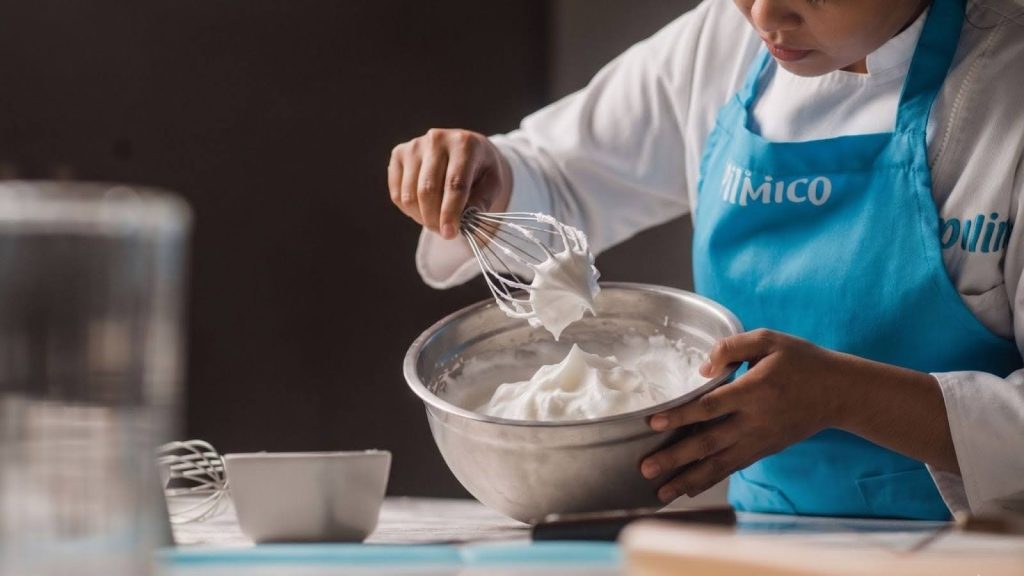
The key to achieving a fluffy soufflé or light sponge cake lies in the power of egg whites. In many of these delicate recipes, egg whites do all the heavy lifting.
The Science: When you whisk egg whites, you introduce air into the liquid, creating a foam filled with tiny bubbles. As the mixture bakes in the oven, the trapped air expands. Simultaneously, the water content in the egg turns into steam, providing even more lift.
3. Color & Flavor: The Golden Standard
Have you ever wondered why a well-baked chocolate chip cookie has that deep, nutty aroma and golden-brown edge? You can thank eggs for facilitating the Maillard reaction.
The Science: Named after French chemist Louis Camille Maillard, this is a chemical reaction between amino acids (from the egg proteins) and reducing sugars. This reaction produces hundreds of different flavor compounds that give baked goods their complex, “toasted” taste. Eggs also act as a carrier, amplifying delicate flavors like vanilla and butter.
Why Your Source Matters
Eggs might seem like a simple pantry staple, but they play several vital roles in baking. They contribute significantly to a recipe’s structure, richness, and overall quality. Therefore, it’s crucial to use high-quality eggs for the best results.
At Aboitiz Foods, our commitment to “Keeping Customers on Top of Mind” drives everything we do. Through our producer brands, Pilmico and Gold Coin, we create premium, science-backed formulations developed by a team of experts to produce feeds that meet our customers’ specific needs.
This nutritional expertise is the foundation of our operations at Pilmico Farms. Our ‘farm-to-fork’ approach ensures that our hens receive the best nutrition possible, resulting in superior-quality, farm-fresh eggs. By adhering to the strictest food safety measures, we ensure that every egg you crack is safe, fresh, and always ready for baking.
So, the next time you reach for an egg, remember: you are not just adding an ingredient, you are adding the “soul” of your bake.
Frequently Asked Questions
1: What is this article about?
This article explores the essential science behind why eggs are indispensable in baking. It breaks down three key functions eggs perform — providing structure through protein coagulation, creating lift through leavening, and developing rich color and flavor through the Maillard reaction. It also highlights why egg quality matters and how a farm-to-fork approach to egg production directly impacts baking outcomes.
2: How do eggs provide structure in baked goods?
Eggs act as a binding agent in baking through a process called coagulation. When heat is applied, egg proteins unfold and bond together, forming a three-dimensional network that transforms liquid batter into a stable solid. Without this process, baked items like cakes would crumble and cookies would spread uncontrollably. Eggs essentially serve as the structural scaffolding that holds all other ingredients together.
3: Why do egg whites make baked goods light and fluffy?
When egg whites are whisked, air is incorporated to create a foam of tiny bubbles. During baking, the trapped air expands with heat, and the water content in the egg converts to steam, providing additional lift. This dual leavening action is what gives delicate baked goods like soufflés and sponge cakes their characteristic light, airy texture.
4: What is the Maillard reaction and how do eggs trigger it?
The Maillard reaction is a chemical process between amino acids in egg proteins and reducing sugars that produces hundreds of flavor compounds, resulting in the complex, toasted taste and golden-brown color of well-baked goods. Named after French chemist Louis Camille Maillard, this reaction is responsible for the deep aroma of chocolate chip cookies and similar treats. Eggs also amplify other delicate flavors such as vanilla and butter.
5: Why does egg quality matter in baking, and how is it ensured?
Higher-quality eggs with vibrant yolks, strong whites, and consistent freshness produce better structure, richer color, and more pronounced flavor in baking. A farm-to-fork approach — beginning with expert-formulated, premium feeds for laying hens — ensures superior nutrition flows through to egg quality. Combined with automated facilities and strict food safety monitoring, this approach delivers safe, consistent eggs ready for every baking application.