As businesses navigate changing markets, emerging technologies, and increasing complexity, growth requires more than simply doing more of what has worked before. It calls for leaders who can challenge established ways of thinking, identify new opportunities, and build the capabilities needed to move organizations forward.
Two women leaders from Aboitiz Foods recently brought these perspectives to industry conversations in the Philippines, sharing practical lessons drawn from their experience across agribusiness, sales, and supply chain.
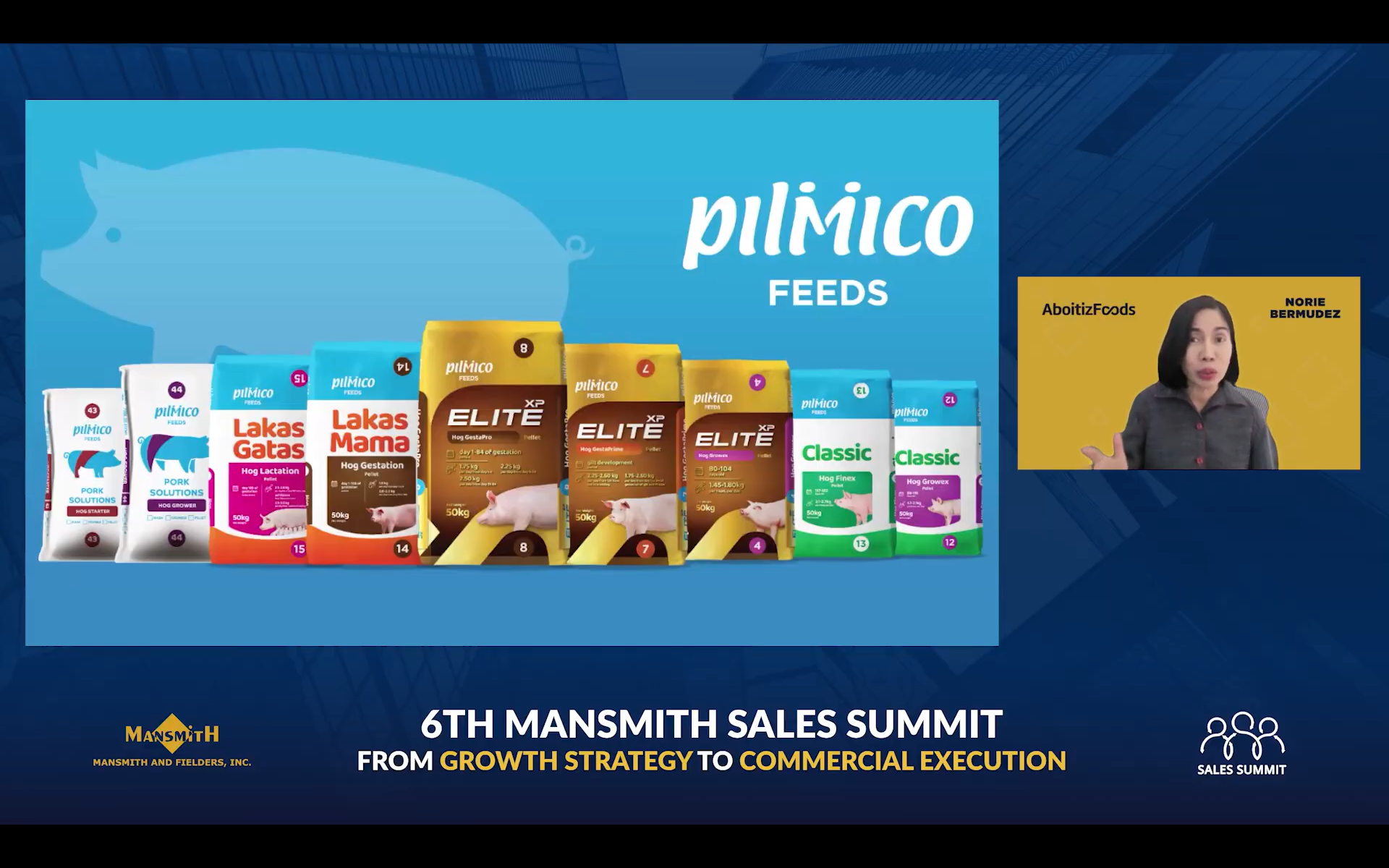
At the 6th Mansmith Sales Summit, Norie Bermudez, First Vice President and Country Director for Agribusiness in the Philippines, spoke about Finding New Sources of Growth, exploring how businesses can strengthen what works today while deliberately creating opportunities for tomorrow. Meanwhile, at the 4th Annual Supply Chain and Logistics Summit, Keng dela Cruz, Vice President for Supply Chain, discussed how organizations can build the capabilities needed to scale increasingly complex supply chains through technology.
Together, their presentations offered two complementary perspectives on a common business challenge: how organizations can continue growing without allowing complexity, disruption, or legacy ways of working to limit what comes next.
Finding New Sources of Growth
Norie Bermudez, First Vice President and Country Director for Agribusiness-Philippines
6th Mansmith Sales Summit, August 13, 2026
For Bermudez, finding new growth begins with recognizing that selling more of the same product is not always enough.
Drawing on Aboitiz Foods’ experience, she shared how the 2019 African Swine Fever (ASF) outbreak exposed the risks of overreliance on a single category.
“With the swine segment driving a major share of the feeds business in the Philippines, the widespread impact of ASF on the country’s swine population compelled the company to respond to a fundamentally changed market,” said Bermudez.
The experience reinforced the importance of Aboitiz Foods’ Dual Transformation Strategy: strengthening and transforming the core businesses that drive performance today while creating tomorrow’s growth engines. Rather than treating these as competing priorities, Bermudez emphasized that the strength of the core—its customer relationships, capabilities, experience, and resources—can provide the foundation for exploring new opportunities.
She identified four practical ways businesses can uncover these opportunities: white space discovery, new segments and occasions, portfolio expansion, and category reinvention.
But finding new growth does not necessarily mean moving far away from what made a business successful in the first place.
“The most sustainable opportunities are usually connected to what the organization already knows, what it already does well, and what its customers genuinely need,” Bermudez said.
Central to all four growth moves is a deeper understanding of the customer.
White space, she explained, is not simply an uncontested market. A meaningful opportunity exists when a real, unmet customer need intersects with the company’s capabilities and long-term direction. This requires businesses to look closely at the problems customers are still solving on their own, the capabilities already available within the organization, and assets or channels that may not yet be fully utilized.
The same thinking applies to portfolio expansion. Rather than adding products simply to build a larger catalog, businesses can ask what else they can offer that makes the existing portfolio more relevant, complete, or valuable. This can include complementary products, technical support, services, new channels, or business models that address a broader customer need.
Category reinvention takes that thinking a step further by looking beyond the product itself to the outcome the customer is trying to achieve.
“Instead of asking, ‘How do we sell more of our product?’ we ask, ‘What is the customer trying to achieve, and how else can we help?’” Bermudez said, adding, “For Aboitiz Foods, this means recognizing that customers do not succeed simply by purchasing feed. They also need to manage animal health, farm operations, productivity, costs, and changing market conditions.”
That shift can lead businesses toward new products, services, partnerships, platforms, and channels that deepen their relevance to customers.
Bermudez also emphasized that diversification does not always require a major investment. New growth engines can begin as focused experiments—testing an opportunity, gathering evidence, and deciding whether to scale, refine, or stop based on what the business learns.
Scaling Intelligent Supply Chains: Building Capabilities Using Technology
Keng dela Cruz, Vice President – Supply Chain
4th Annual Supply Chain and Logistics Summit, August 6, 2026
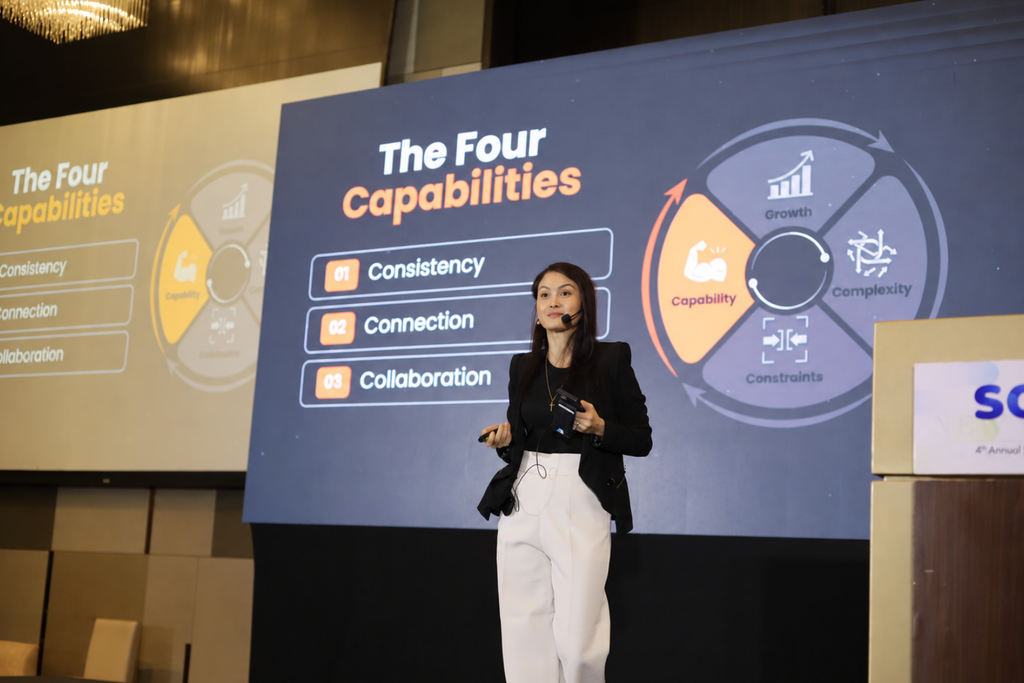
4th Annual Supply Chain and Logistics Summit.
If Bermudez’s presentation explored where organizations can find growth, dela Cruz focused on what must happen inside the organization for that growth to remain sustainable.
Her presentation, “Scaling Intelligent Supply Chains: Building Capabilities Using Technology,” began with a straightforward premise: growth creates complexity.
As organizations expand, the number of suppliers, facilities, products, decisions, and stakeholders also grows. The challenge is ensuring that organizational capability develops fast enough to manage that complexity.
Dela Cruz organized this evolution around four capabilities: Consistency, Connection, Collaboration, and Cognition.
Dela Cruz further elaborated that consistency establishes common ways of working. In procurement, for example, growth can mean more plants, suppliers, buyers, and spend categories. But without standardized processes, this can quickly create inefficiency and complexity. Digital procurement helps establish common processes that allow organizations to operate more consistently as they scale.
Connection takes the organization from effective individual departments toward an integrated value stream. As businesses grow, individual functions may each perform well while still pursuing different priorities. The greater challenge is ensuring that these functions work together toward the same outcome.
“Great departments do not create great supply chains. Great synchronization does,” dela Cruz said.
This becomes particularly important from the customer’s perspective. As she emphasized in her presentation, “Customers do not experience individual departments—they experience the flow of the business. Connected processes and a common source of information can therefore support better coordination and decision-making across the supply chain,” dela Cruz added.
Collaboration becomes increasingly important as organizations operate across countries. Regional scale, dela Cruz explained, does not come simply from being present in more markets. It comes when those markets begin making decisions together. A regional procurement platform, for instance, can create a shared supplier community, sourcing approach, procurement language, and view of spend across the organization.
Finally, Cognition addresses a newer challenge: the growing volume and complexity of information leaders must process.
Modern supply chains contend with hundreds of products, as well as weather disruptions, geopolitical risks, freight availability, port congestion, currency fluctuations, and commodity price volatility. Technology, including artificial intelligence and machine learning, can help leaders process these signals and evaluate more variables than before.
But dela Cruz was equally clear that technology should support—not replace—leadership judgment.
“AI doesn’t create great decisions. Great leaders do.”
Her point places technology in the context of capability-building. AI can augment judgment and help organizations process increasing complexity, but effective decisions still depend on people who understand the business and can apply the information meaningfully.
Turning growth opportunities into capability
While the two presentations approached transformation from different disciplines, they arrived at a similar principle: growth and capability must develop together.
Finding a promising new market, product, service, or business model is only the beginning. Organizations also need the processes, connections, collaboration, technology, and leadership judgment to turn those opportunities into sustainable growth.
Bermudez encouraged businesses to look more closely at the customers, capabilities, assets, and partnerships they already have, and to deliberately test promising ideas before scaling them. Dela Cruz, meanwhile, challenged organizations to continually identify and build the next set of required capabilities as growth introduces new levels of complexity.
Taken together, their perspectives reflect an approach to transformation that is both ambitious and grounded: strengthen what works, remain close to the customer, build the capabilities required for what comes next, and apply technology where it can create greater value.
As Aboitiz Foods continues to pursue its purpose of sustainably feeding Asia’s growth from mill to meal, these conversations also demonstrate how its leaders are contributing practical perspectives to broader industry discussions on growth, transformation, and the future of food and agribusiness.
Use up and down arrow keys to resize the meta box pane.
Use up and down arrow keys to resize the meta box pane.