The future of food takes shape long before it reaches the table. It begins with sourcing ingredients, producing animal feed, supporting farms, and connecting supply chains throughout the food value chain – from mill to meal.
For the Philippine feed industry, managing raw material price volatility, logistics constraints, and supply disruptions requires more than operational agility. It calls for a more sustainable and resilient business approach—one that ensures that every feed reaching animals is safe, responsibly produced, and formulated for optimal nutrition.
These themes took center stage at the Philippine Association of Feed Millers, Inc (PAFMI) Academy Masterclass 2026, held on October 19 at Marquis Events Place. The event’s theme was “Feeding the Future: Building a Sustainable and Resilient Philippine Feed Industry.”
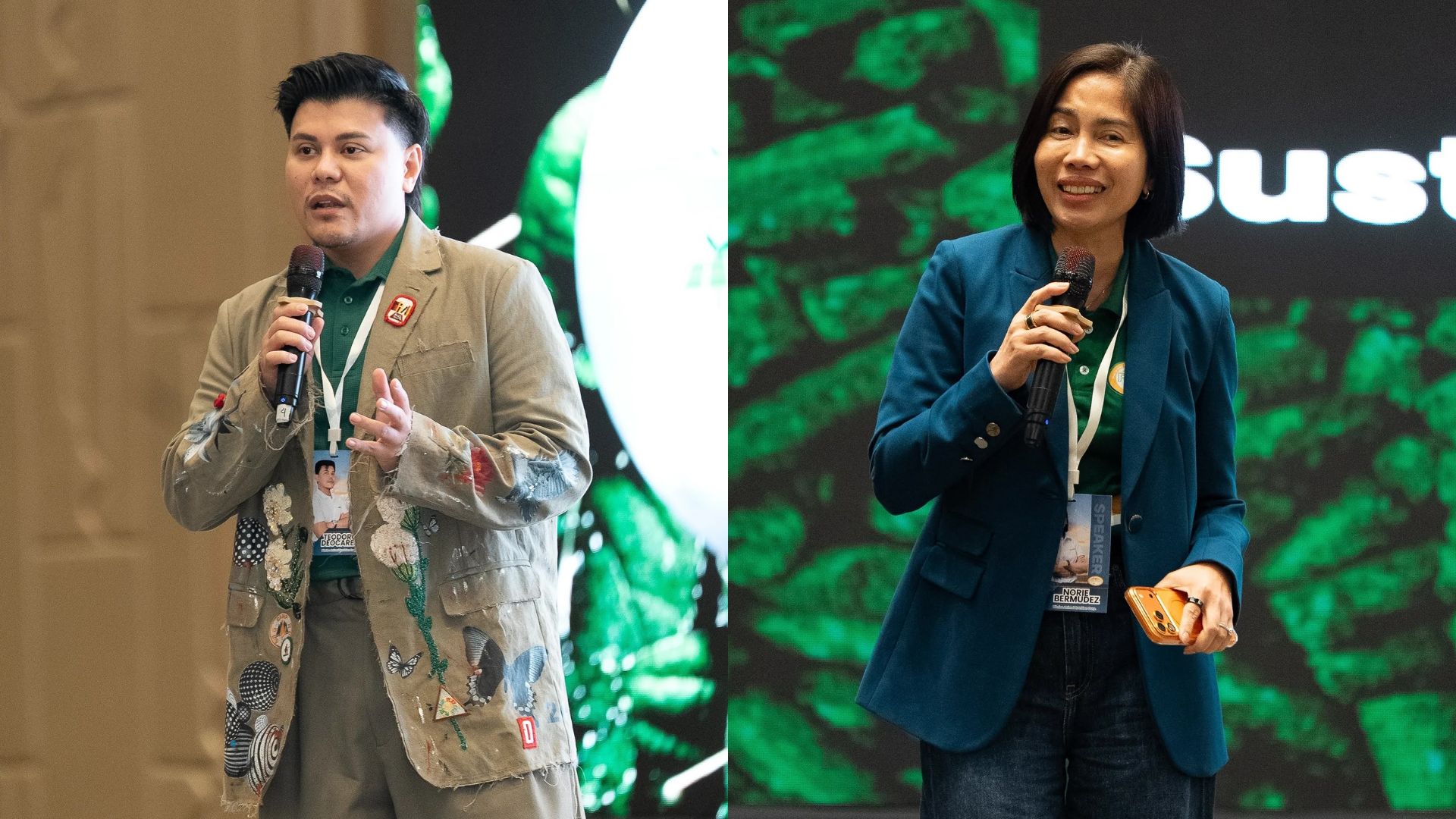
Among the speakers were Aboitiz Foods First Vice President for Supply Chain Teodoro “Teddy” Deocares, who also serves as PAFMI president, and First Vice President and Agribusiness Philippines Country Director Norie Bermudez.
Building resilience across the supply chain
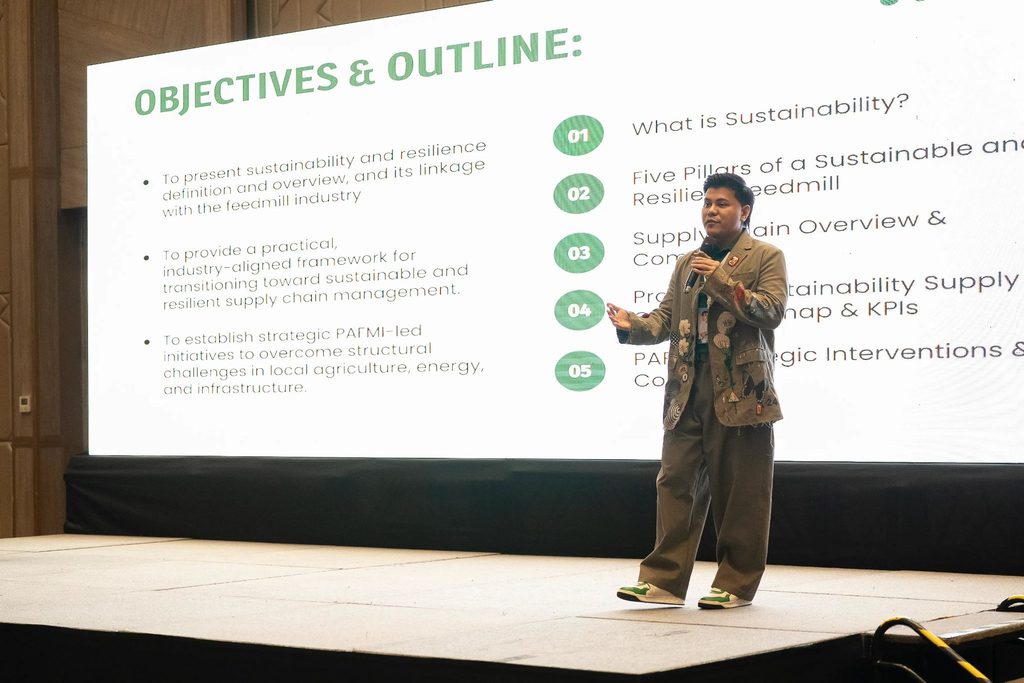
Strengthening the feed industry. Teodoro “Teddy” Deocares, PAFMI President and FVP for Supply Chain at Aboitiz Foods, shares insights on building sustainable and resilient feed supply chains during the PAFMI Academy Masterclass 2026, emphasizing the importance of collaboration, proactive risk management, and operational efficiency to strengthen the feed industry.
In his presentation, Deocares emphasized that sustainability and resilience are closely connected but not interchangeable. A supply chain may adopt more sustainable practices, yet remain vulnerable to interruptions. Conversely, measures that protect supply continuity may carry additional costs or environmental considerations.
“A sustainable supply chain maintains long-term economic, environmental, and social viability,” said Deocares, and underscored, “A resilient supply chain can withstand disruptions, maintain critical operations, and recover quickly.”
According to Deocares, this perspective is particularly relevant to the Philippine feed sector, where access to raw materials can be affected by global market movements, geopolitical developments, weather conditions, and domestic supply constraints. Maintaining continuity calls for anticipating vulnerabilities and strengthening the systems that support operations.
Reinforcing supply chains requires proactive measures: mapping vulnerabilities, developing alternative sourcing and logistics options, strengthening local sourcing partnerships, reducing material and energy losses, and establishing clear performance targets.
Deocares remarked, “Sustainability is a shared connection. Because there’s no single company that could ensure the overall health of the entire food value chain. We need each other for this to happen.”
His insights also highlighted the importance of operational efficiency and cost transparency. In a separate speaking engagement, Deocares shared Aboitiz Foods’ experience using Project Compass to improve supply chain cost management.
Implemented with VISEO using Anaplan, the initiative supports standardized reporting, structured analysis, and forecasting. It also helps reduce manual processes, allowing teams to focus more on identifying cost drivers and making timely decisions. For instance, the time required to reforecast freight costs was reduced from approximately 8 hours to 2 hours.
The experience highlights a broader lesson: reliable data and greater cost visibility are essential not only for managing expenses, but also for responding more effectively to changing business conditions.
“You cannot improve what you cannot measure,” he said.
Translating sustainability into customer value
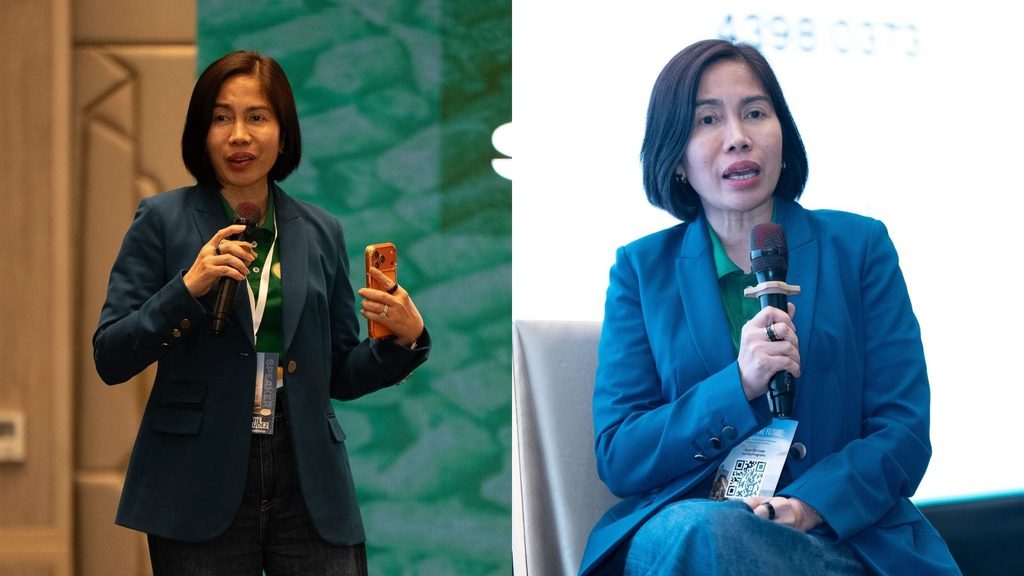
Advancing customer-centric sustainability solutions. Norie Bermudez, FVP and Country Director for Agribusiness Philippines at Aboitiz Foods, shares insights during the PAFMI Academy Masterclass 2026, highlighting how practical, commercially viable sustainability solutions can create value for customers while supporting more efficient and responsible practices in the feed industry.
While supply chain resilience provides an industry-wide foundation, sustainability must also translate into tangible value for customers.
In her session, “Beyond the Feed Bag: Sustainability in Sales and Marketing,” Bermudez emphasized that responsible practices become more meaningful when they address the everyday realities of customers—particularly farmers who must manage the operational demands of their businesses.
“For a farmer managing feed costs, animal performance, and the day-to-day realities of running a farm, sustainability has to mean something much more practical,” she said.
For sales and marketing professionals, this requires moving beyond broad sustainability claims and understanding what customers actually need. Bermudez presented a practical approach: diagnose the customer’s challenges, match them with relevant solutions, demonstrate value with evidence, and review results over time.
This approach reinforces the idea that sustainability and business performance do not have to be competing priorities. Responsible production practices can create value by helping customers improve efficiency, manage resources more effectively, or make more informed decisions.
“The strongest sustainability initiatives are those where responsible practices and better business performance reinforce each other,” Bermudez noted.
Credibility, however, remains essential. According to Bermudez, as sustainability becomes more prominent in business conversations, companies must not dwell on highly technical metrics, but rather consistently track indicators that reflect real progress.
“For those of us in sales and marketing, our role is not to make sustainability sound bigger than it is. Our role is to make its value clearer, more relevant, and more credible,” she said.
The perspectives shared by Deocares and Bermudez reflect a common understanding: sustainability is not achieved through isolated initiatives. It requires practical improvements, informed decisions, and collaboration across the food value chain.
From ethical sourcing and efficient feed production to customer support and community livelihoods, every stage contributes to the future of food – ensuring that everymeal that reaches a family’s table is safe, nutritious, and responsibly produced.
Building a dependable food value chain, from mill to meal, means more than producing and delivering products. It requires strengthening partnerships, efficiently integrating processes and systems, building expertise, and continuously finding ways to better serve customers and communities today…to nourish the future.
Tanya Jawab:
- What was the PAFMI Academy Masterclass 2026 about?
The PAFMI Academy Masterclass 2026 explored how the Philippine feed industry can build more sustainable and resilient operations. Held on October 19, 2026, under the theme “Feeding the Future: Building a Sustainable and Resilient Philippine Feed Industry,” the event brought together industry speakers to discuss supply chain resilience, sustainability, and customer value.
- How can companies strengthen supply chain resilience?
According to Aboitiz Foods FVP for Supply Chain and PAFMI President Teddy Deocares, companies can strengthen supply chain resilience by mapping vulnerabilities, developing alternative sourcing and logistics options, strengthening local sourcing partnerships, reducing material and energy losses, and establishing clear performance targets.
- How can sustainability translate into value for customers?
According to Aboitiz Foods First Vice President and Agribusiness Philippines Country Director Norie Bermudez, sustainability becomes more meaningful when it addresses customers’ actual needs and business realities. This involves understanding their challenges, matching them with relevant solutions, demonstrating value with evidence, and reviewing results over time.
- Why is measuring sustainability progress important?
Consistently tracking relevant indicators allows companies to assess their progress and communicate their sustainability efforts credibly. Bermudez emphasized that companies should focus on metrics that reflect actual progress rather than simply presenting more sophisticated measurements or making claims that go beyond what the results demonstrate.
- What is Project Compass, and how does it support Aboitiz Foods’ supply chain operations?
Project Compass is an initiative implemented with VISEO using Anaplan to improve supply chain cost management through standardized reporting, structured analysis, and forecasting. It also helps reduce manual processes and improve cost visibility. Through the initiative, the time required to reforecast freight costs was reduced from approximately eight hours to two hours.