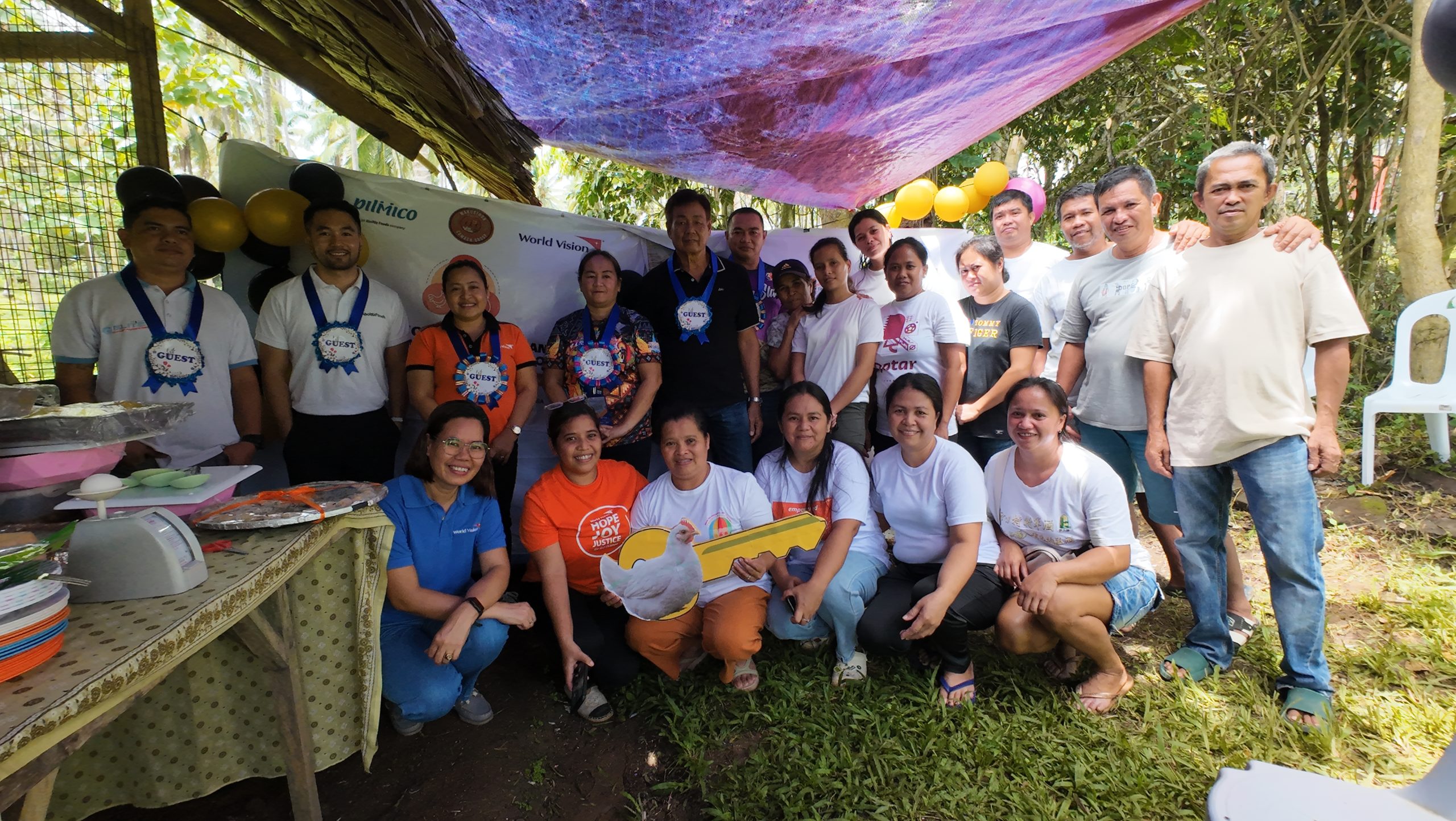
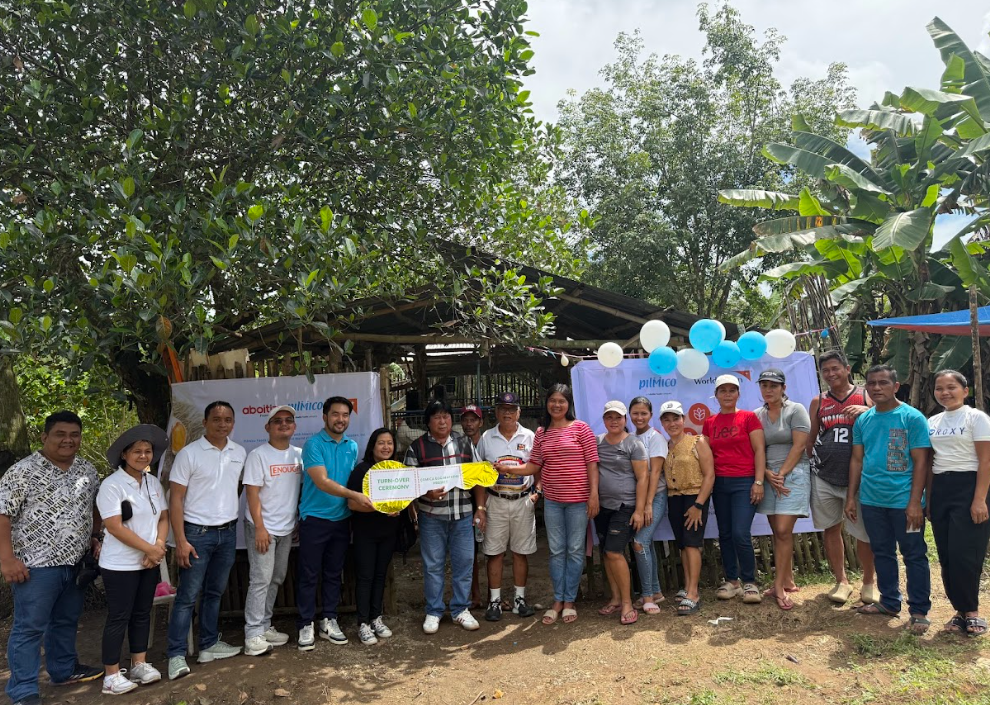
Building sustainable livelihoods. Representatives from Aboitiz Foods, World Vision, and the local government join members of the Makugihon CoMSCA group during the ceremonial turnover of an egg machine livelihood kit under Project Omelette in Barangay Balon, Tudela, Misamis Occidental.
(TUDELA, Misamis Occidental) Improving both nutrition and livelihoods in rural communities, Aboitiz Foods, through Pilmico Foods Corporation (Pilmico), teamed up with Aboitiz Foundation, Inc. and World Vision to expand Project Omelette—an initiative that equips farmers and aspiring entrepreneurs with poultry farming resources, skills training, and technical assistance enabling them to produce and sell fresh eggs.
Following the implementation in Negros Occidental in 2024 and Zamboanga Del Norte in 2025, Aboitiz Foods brought Project Omelette to Tudela, Misamis Occidental. The company recently turned over a new egg machine livelihood kit to the Makugihon Community-managed Savings and Credit Association (CoMSCA), helping their community establish a sustainable poultry enterprise.
“Through collaboration with our partner organizations, the local government unit, and the barangay, we hope this livelihood will succeed and inspire members to sustain and grow the project,” said Greg Canoy, Corporate Social Responsibility Supervisor at Aboitiz Foods, during the turnover ceremony on March 11, 2026.
Part of the Pilmico Livelihood Kit Program, each Project Omelette livelihood package includes four egg machines with 192 ready-to-lay hens, two months’ worth of poultry feed, an egg-weighing scale, animal health products, and technical support from Pilmico. These resources will help beneficiaries launch poultry operations that generate additional income while improving access to affordable eggs in their communities.
“Our commitment to nourishing the future together continues to guide our work. We ensure that our progress is shared, allowing our communities to move forward alongside us,” added Canoy.
World Vision emphasized that the initiative reflects a shared commitment to empowering families and strengthening communities through sustainable livelihood opportunities.
“It is truly a blessing that this livelihood project was finally turned over to our CoMSCA group, as it is a dream come true for us,” said Rosevilla Cabasag, Program Manager for Mindanao at World Vision, adding, “This initiative will help the group earn sustainable income, provide the community with easier access to quality eggs, and contribute to the barangay’s economic development.”
For beneficiaries, the project represents both an opportunity and a responsibility to grow a livelihood that will support their families and community.
“The quality of the hens and Pilmico feeds is very good. As ‘Makugihon’ means hardworking, we will work diligently with our members to make this livelihood successful and sustainable for many years to come,” said Erma S. Tabiliran, Chairperson of Makugihon CoMSCA.
Earlier in October 2025, Aboitiz Foods, Aboitiz Foundation, and World Vision, turned over egg production livelihood kits to three CoMSCA groups in Siayan, Zamboanga del Norte—helping jumpstart sustainable poultry enterprises for local communities.
The initiative continues to gain ground, with Aboitiz Foods partnering with the Department of Agriculture (DA) and the Department of Agrarian Reform (DAR) to bring the project to Bukidnon, where four egg machine livelihood kits will be turned over to a cooperative in Mantibugao this March.
Since 2014, the Pilmico Livelihood Kit Program has supported over 1,000 beneficiaries across the country through partnerships with the DA, DAR, Ramon Aboitiz Foundation Micro-finance, Inc., and World Vision. Under this program, Aboitiz Foods has distributed egg machine kits, bakery starter packages, gilts, piglets, aquaponic sets, and quails. Aside from the livelihood packages, Pilmico has also provided technical training and support to beneficiaries to ensure the sustainability of their agribusinesses.
Through initiatives like Project Omelette, Aboitiz Foods continues to live out its brand promise, “Together, We Nourish the Future,” by supporting livelihoods, empowering families, and strengthening communities. Partnerships with like-minded organizations like World Vision help create shared value—enabling families to build sustainable incomes while improving access to nutritious food for communities across the country.
Frequently Asked Questions
1: What is this article about?
This article covers the expansion of Project Omelette — a livelihood initiative under the Pilmico Livelihood Kit Program — to Tudela, Misamis Occidental in Mindanao. A new egg machine livelihood kit was turned over to the Makugihon CoMSCA community group, equipping them with hens, feed, equipment, and technical support to establish a sustainable poultry enterprise and improve local access to affordable eggs.
2: What is Project Omelette and what does each livelihood kit include?
Project Omelette is a community livelihood initiative that equips farmers and aspiring entrepreneurs with everything they need to start a backyard egg production business. Each kit includes four egg machines with 192 ready-to-lay hens, a two-month supply of premium poultry feed, an egg-weighing scale, animal health products, and ongoing technical training and support from Pilmico. The package is designed to help beneficiaries generate sustainable income while improving access to nutritious, affordable eggs in their communities.
3: Which communities has Project Omelette reached, and who are the key partners?
Project Omelette has been implemented in Negros Occidental in 2024, Zamboanga del Norte in 2025, and Tudela, Misamis Occidental in 2026. It is expanding to Bukidnon through partnerships with the Department of Agriculture and the Department of Agrarian Reform. Key partners include Aboitiz Foundation, World Vision, and various local government units, reflecting a multi-stakeholder model that combines corporate resources with government reach and civil society expertise.
4: How does this project address both nutrition and economic development simultaneously?
By enabling community groups to produce and sell fresh eggs locally, the project improves two dimensions of community well-being at once. Affordable, locally produced eggs become more accessible to households that may otherwise lack consistent access to protein-rich food. At the same time, the enterprise generates a sustainable income stream for participating members, reducing economic vulnerability. This dual impact — nutritional and economic — makes the model particularly effective for rural communities with limited market access.
5: What is the broader track record of the Pilmico Livelihood Kit Program?
Since its launch in 2014, the Pilmico Livelihood Kit Program has supported over 1,000 beneficiaries across the Philippines. Beyond egg production, the program has distributed bakery starter packages, gilts, piglets, aquaponic sets, and quails to beneficiary groups in partnership with the Department of Agriculture, the Department of Agrarian Reform, Ramon Aboitiz Foundation Micro-finance, Inc., and World Vision. Technical training accompanies every package to ensure that beneficiaries have the knowledge needed to sustain and grow their agribusinesses over time.