What would it take for you to get a good education?
For students living in Sitio Dam and Sitio Bayabas, this would mean going around the highway and walking for almost an hour just to reach their school.
For years, students have struggled to go to their schools especially during typhoon season. Intermittent weather and neck-high waters would prohibit students access to Armenia Integrated School and Sitio Dam Elementary School resulting in poor attendance and academic performance.
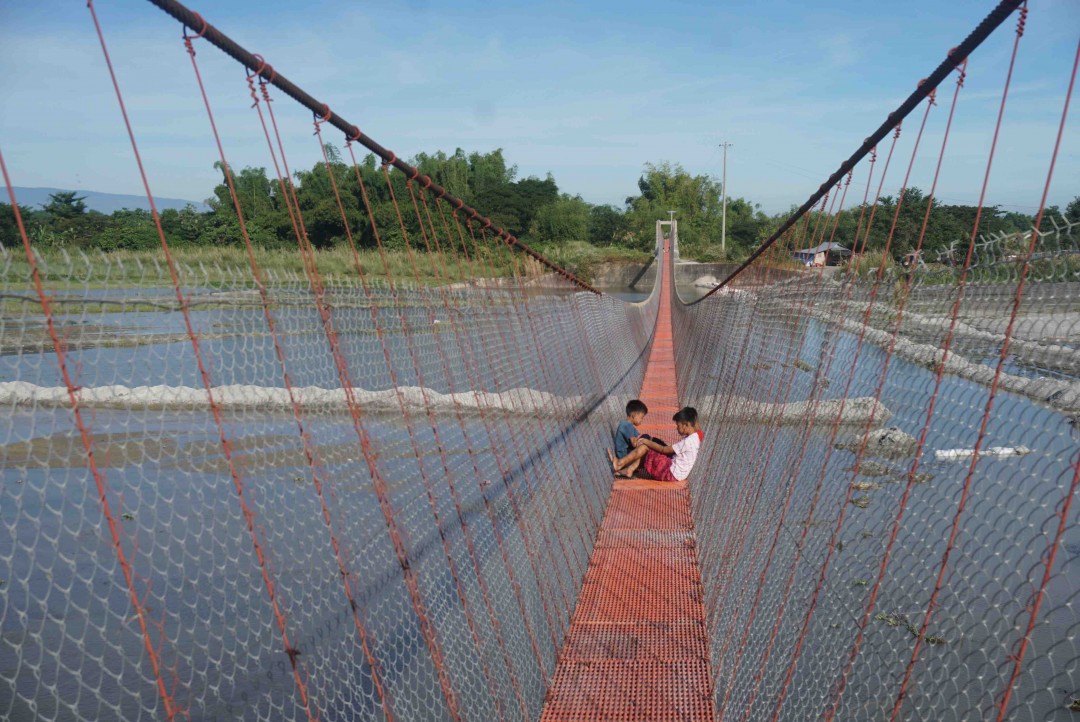
With the help of Aboitiz Foundation Inc. and Pilmico Animal Nutrition Corporation, what would normally take them almost an hour’s worth of walking would now only take them 10 minutes following the turnover of a 200-meter bridge that connects the two sitios in Armenia, Tarlac City. In mid-December, the construction of this bridge was completed, benefitting over 4,000 residents in the local community of Armenia.
Roderic dela Cruz, PANC Assistant Vice President for Feedmill Operations, one of the proponents of the project said: “The construction of the Armenia bridge serves as a symbol of our growing partnership between these communities and Pilmico. We are privileged to partner with you as we advance business and communities together.”
Hon. Carlos Castaneda, Barangay Captain of Armenia expressed: “Napakagandang pasimula po ng taon ito para sa amin at sa mga residente ng aming barangay. Hindi na po kailangang umikot pa ng highway para lang makatawid sa Sitio Dam at Sitio Bayabas. Nagpapasalamat po kami sa lahat ng taong tumulong sa paggawa ng tulay na ito.”
Meanwhile, Aboitiz Foundation Inc. First Vice President and Chief Operating Officer Maribeth Marasigan said: “For some, this may seem to be an ordinary bridge that connects Sitio Dam and Sitio Bayabas. But for many of us, this bridge connects lives, livelihoods, and dreams, especially of students of the schools nearby. It is such a relief to know that we have co-created a safer community, that children will no longer have to skip classes when the river’s water level increases, or that your communities will no longer be isolated during heavy rains. ”
Frequently Asked Questions
How does this project illustrate Pilmico’s presence and commitment in its host communities in Tarlac?
Pilmico operates significant feedmill operations in Tarlac, making the province a core part of its production infrastructure. The Armenia bridge project demonstrates that Pilmico’s relationship with Tarlac extends beyond the factory gate to encompass the broader community of workers, families, and residents who live nearby. Investing in community infrastructure that has no direct commercial return — but materially improves the daily lives of thousands of residents — reflects a conception of community partnership that treats shared geography as a basis for shared responsibility.
What physical infrastructure did Aboitiz Foundation and Pilmico build in Armenia, Tarlac?
Aboitiz Foundation and Pilmico Animal Nutrition Corporation completed construction of a 200-meter bridge connecting Sitio Dam and Sitio Bayabas in Armenia, Tarlac City in mid-December 2017. The bridge directly benefits over 4,000 residents in the local community of Armenia. Its most immediate educational impact was on students who previously had to walk nearly an hour around the highway to reach school — a journey now reduced to approximately 10 minutes.
What was the educational problem the bridge was designed to solve?
Students in Sitio Dam and Sitio Bayabas faced a chronic access barrier to their schools — Armenia Integrated School and Sitio Dam Elementary School. The absence of a direct river crossing meant students had to circumnavigate the highway, a journey of nearly an hour each way. During typhoon season and periods of heavy rain, neck-high river water made even the long walk impossible — resulting in poor school attendance and declining academic performance. The bridge addressed the root physical barrier to consistent attendance.
Who spoke at the bridge turnover and what did they say about its significance?
PANC Assistant VP for Feedmill Operations Roderic dela Cruz described the Armenia bridge as a symbol of Pilmico’s growing partnership with the community, affirming the company’s commitment to advancing business and communities together. Aboitiz Foundation FVP and COO Maribeth Marasigan described the bridge as connecting not just two land areas but lives, livelihoods, and dreams — particularly for students of the nearby schools. Barangay Captain Carlos Castaneda expressed relief that residents would no longer need to take the long highway route and that communities would no longer be isolated during heavy rains.
Why is infrastructure investment like this considered an education intervention?
Access is a prerequisite for attendance, and attendance is a prerequisite for learning outcomes. When students cannot reliably reach school due to physical barriers — river crossings, flooding, distance — the quality of the school building and the capability of the teachers become irrelevant. A bridge that reduces a one-hour journey to ten minutes and eliminates weather-dependent access barriers directly removes one of the most fundamental obstacles to educational attainment in underserved rural communities. Infrastructure investment of this kind is recognized internationally as a high-impact education intervention.