Ensuring quality education continues to be one of the pressing challenges that many countries face. Addressing the issue requires a holistic approach, which means not only providing access to effective educational materials but also ensuring schools, especially those in rural areas, are equipped with the necessary equipment that would allow them to have an environment conducive to learning for students. As the United Nations Children’s Fund (UNICEF) described Sustainable Development Goal #4, “It recognizes the need to provide quality education for all, and most especially vulnerable populations, including poor children, children living in rural areas, persons with disabilities, indigenous people and refugee children.”
Aboitiz Foods is dedicated to supporting the education sector through this initiative, Project EduCare. This program combines “Edu” (Education) and “Care” (Well-being and Support) to promote learning while nurturing the holistic needs of individuals and communities. Recently, Aboitiz Foods, through Gold Coin China, held turnover ceremonies at two primary schools in China as part of its ongoing commitment to education.
Empowering Rural Classrooms in Dongguan
Baimao Primary School in Dongguan, China, is located in a rural area where many families live below the poverty line. As a result, students often struggle with continuing their education due to limited financial resources and access to adequate learning materials. Recognizing this need, Aboitiz Foods has chosen them as one of its key beneficiaries for the past three years, helping to provide a better learning environment.
On May 26, 2025, Aboitiz Foods, headed by Country Director for China, Dr. Kar Ching Ong, turned over school supplies worth 34,127 CNY to Baimao Primary School. A total of 156 students received uniforms, snacks, and other essential learning materials.
Chen Shuwei, a Longkou Border Police Officer, expressed his gratitude to the organization for its support, “Thanks to the joint efforts of society and various organizations, more and more compassionate forces are coming together. This allows children to feel the warmth and care of the community. We hope that more caring individuals and enterprises will turn their attention to Sanjiang and help brighten the future of its children through charity and love.”
Bridging Educational Gaps in Zhangzhou
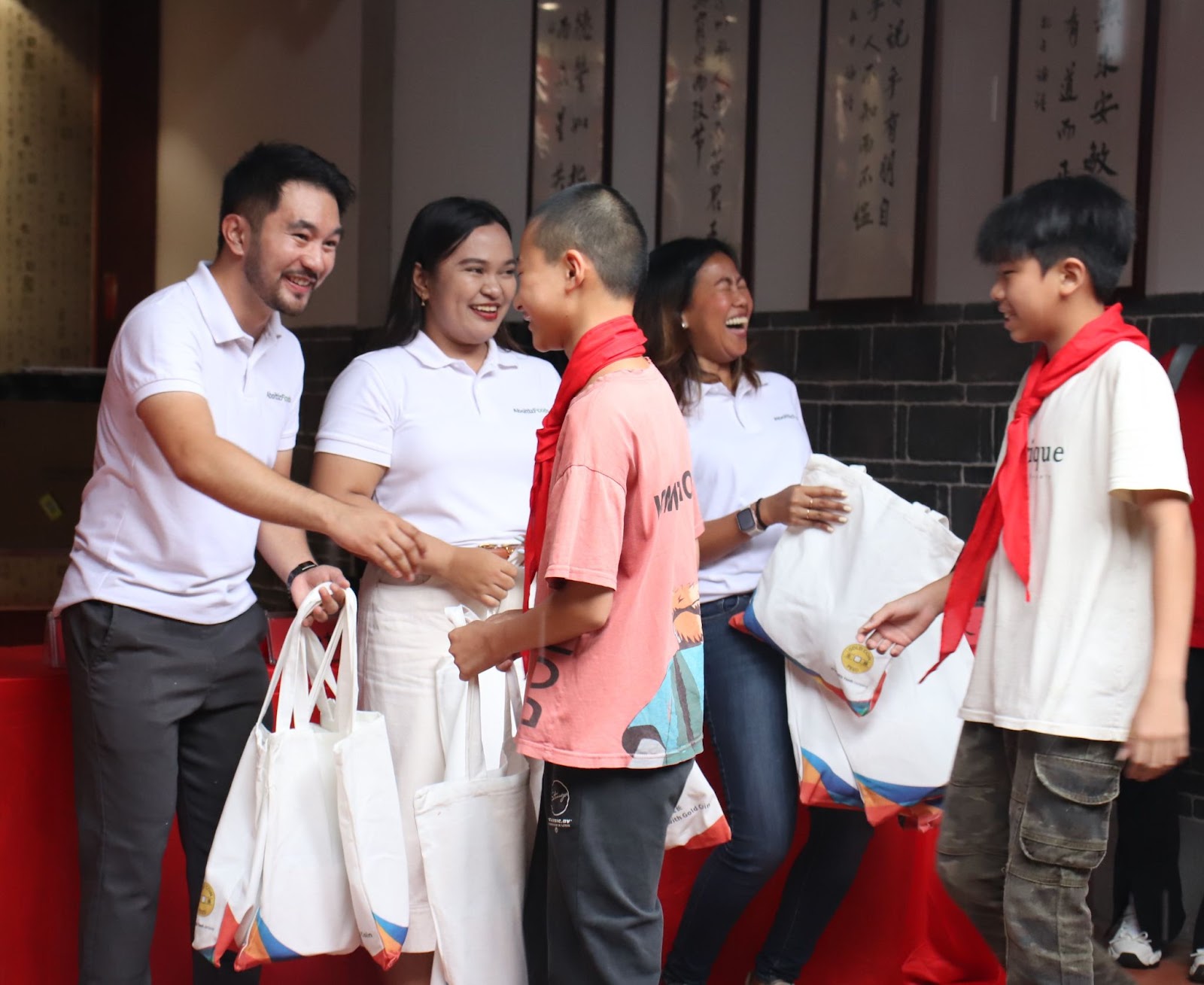
Students at Hungtian Primary School in Zhangzhou, China, face similar challenges, such as a lack of financial support and limited educational resources. One of the school’s main concerns is outdated IT equipment and insufficient learning materials, making it difficult for both students and teachers to keep up with today’s technological demands. As part of Aboitiz Foods’ commitment to supporting educational institutions to attain quality education, they donated IT equipment—including computers—educational materials, and sports equipment on May 29, 2025.
“Thank you, Gold Coin Group and Aboitiz Foods, for your care for Huangtian pupils. I believe that the children will be able to establish a sense of gratitude and social responsibility through what they see and hear,” Zheng Wenxiu, Hungarian Primary School Head, said.
Additionally, the primary school has partnered with Aboitiz Foods for five years, with ongoing support focused on uplifting underprivileged students. This year, the company extended its financial support to two more students, providing 1,000 CNY each to help with their educational needs. In total, Aboitiz Foods donated over 17,000 CNY worth of support to the Hungtian Primary School Students.
Achieving quality education for all remains a challenge, but it is possible. Aboitiz Foods’ Project EduCare is founded on the belief that quality education goes hand-in-hand with empathy and inclusion. The project supports a wide range of initiatives, including digital learning, scholarships, school infrastructure, teacher development, and special education programs across Asia. Through these initiatives, Aboitiz Foods continues to play its part in nourishing the future of students throughout the region.
Frequently Asked Questions
How does Project EduCare fit into Aboitiz Foods’ broader regional mission?
Project EduCare is part of a wider portfolio of education initiatives spanning Asia, including digital learning, scholarships, school infrastructure, teacher development, and special education programs. It reflects Aboitiz Foods’ commitment to nourishing future generations not just through food and feed, but by investing in the communities and educational ecosystems that support long-term human development.
What is Project EduCare and what does it aim to address?
Project EduCare is Aboitiz Foods’ education-focused CSR initiative implemented through Gold Coin China. It combines “Edu” (Education) and “Care” (Well-being and Support) to provide schools – particularly in rural and underserved areas – with learning materials, equipment, scholarships, and infrastructure support, helping bridge educational gaps that financial limitations and resource shortages create for students.
Which schools in China recently received support through Project EduCare?
Two schools benefited in 2025. Baimao Primary School in Dongguan received school supplies, uniforms, snacks, and essential learning materials for 156 students on May 26, 2025. Hungtian Primary School in Zhangzhou received IT equipment including computers, educational materials, and sports equipment on May 29, 2025, along with continued financial sponsorship for individual students.
What specific donations were made to Hungtian Primary School in Zhangzhou?
Aboitiz Foods donated IT equipment, educational materials, and sports equipment totaling over 17,000 CNY. The company also extended financial support to two additional students, providing 1,000 CNY each for their educational needs. This extends a five-year ongoing partnership between Aboitiz Foods and the school.
What types of educational challenges does Project EduCare specifically target in rural China?
The program addresses limited financial resources for students and families, lack of access to adequate learning materials, outdated IT equipment, and insufficient physical resources that make it difficult for students and teachers to keep pace with today’s technological and educational demands – particularly in schools located in rural or low-income areas.