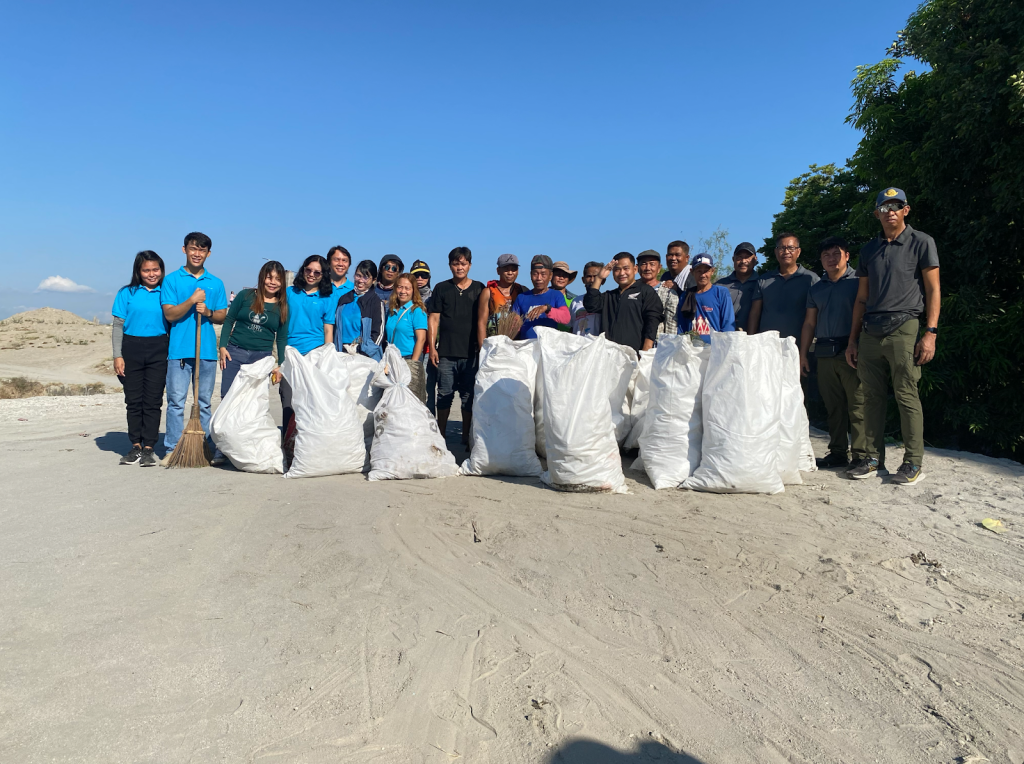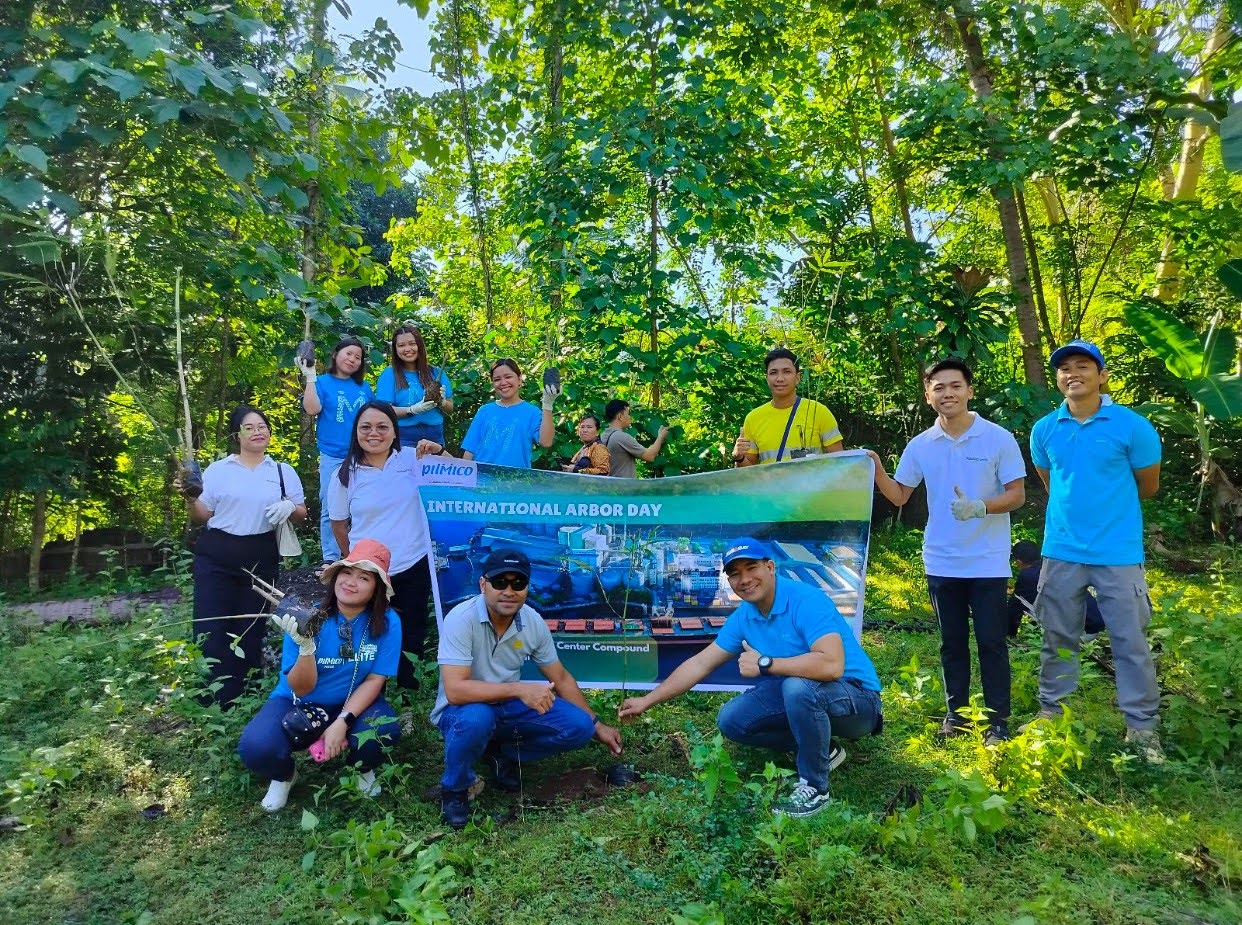
In celebration of World Arbor Day 2025, last June, Aboitiz Foods, through Pilmico, organized tree planting activities in Tarlac and Iligan. These efforts are part of Aboitiz Foods’ ongoing commitment to environmental stewardship and community collaboration.
77 Aboitiz Foods team members joined local government units (LGU) to plant over 385 seedlings across designated sites in Bamban, Tarlac, and Iligan City. In Tarlac, 100 narra and mahogany trees were planted with the support of the Bamban Municipal Agriculture Office, Bamban Municipal Environment and Natural Resources Office (MENRO), and Barangay Lourdes. Meanwhile, team members from Iligan planted 285 bamboo seedlings in partnership with the City Environment and Natural Resources Office (CENRO) and the City Environment Management Office.
Engr. Michael Lugma, a former Pilmico employee and now the Head Municipal Agriculturist of Bamban MENRO, was grateful to the organization for their proactive participation. “This initiative is truly important, especially since we all feel the intense heat during summer here in Bamban. As a former Pilmico employee, I appreciate your shirt that says ‘Responsibility’—it reflects your commitment. We’re grateful to your company for leading activities like this that benefit our community and environment,” he said.
The tree-planting initiative serves as a reminder that meaningful environmental change begins with collective action. Each seedling planted reflects one of Aboitiz Foods’ core values: responsibility. It symbolizes the organization’s enduring commitment to sustainability, emphasizing that caring for the environment is a shared responsibility.
As we continue to work hand-in-hand with local communities and government agencies, we can help enact efforts that create a lasting impact by providing greener spaces today and fostering healthier ecosystems for future generations.

These tree-planting initiatives demonstrate Aboitiz Foods’ ongoing commitment to co-creating resilient, thriving communities aligned with the Sustainable Development Goals on Climate Action (SDG 13) and Life on Land (SDG 15). Through consistent, grounded action, the company invests in a future where people, planet, and progress grow together.
Frequently Asked Questions
Which UN Sustainable Development Goals do these tree-planting efforts support?
The initiative is aligned with SDG 13 (Climate Action) and SDG 15 (Life on Land). By planting native and bamboo species in coordination with local authorities, Aboitiz Foods contributes to reducing carbon footprint, preventing land degradation, and preserving biodiversity in the communities where it operates.
Why did Aboitiz Foods choose World Arbor Day as the occasion for these tree-planting activities?
World Arbor Day serves as a globally recognized call to action for environmental responsibility. Aboitiz Foods used this occasion to translate its sustainability commitments into concrete, community-level action – reinforcing that environmental stewardship is not a one-time effort but an ongoing organizational value embedded in how the company operates across the Philippines.
What specific tree species and seedlings were planted, and where?
In Bamban, Tarlac, the team planted 100 narra and mahogany trees. In Iligan City, 285 bamboo seedlings were planted. Both species were selected in coordination with local environment offices, making the initiative ecologically appropriate to each location and aligned with local reforestation and erosion-prevention priorities.
Which local government units and agencies collaborated with Aboitiz Foods in these activities?
In Tarlac, partners included the Bamban Municipal Agriculture Office, the Bamban Municipal Environment and Natural Resources Office (MENRO), and Barangay Lourdes. In Iligan, the team coordinated with the City Environment and Natural Resources Office (CENRO) and the City Environment Management Office – demonstrating a multi-agency approach to environmental action.
How many Aboitiz Foods employees participated, and which departments were involved?
A total of 77 Aboitiz Foods team members joined the initiative. Participants came from various departments including operations, quality assurance, and utility – indicating that the tree-planting effort was a cross-functional, company-wide activity and not limited to a single team or sustainability unit.