In today’s increasingly competitive food and agricultural landscape, resilience is crucial. As technology accelerates and global shifts create new layers of uncertainty, companies must find innovative ways to navigate and overcome emerging threats.
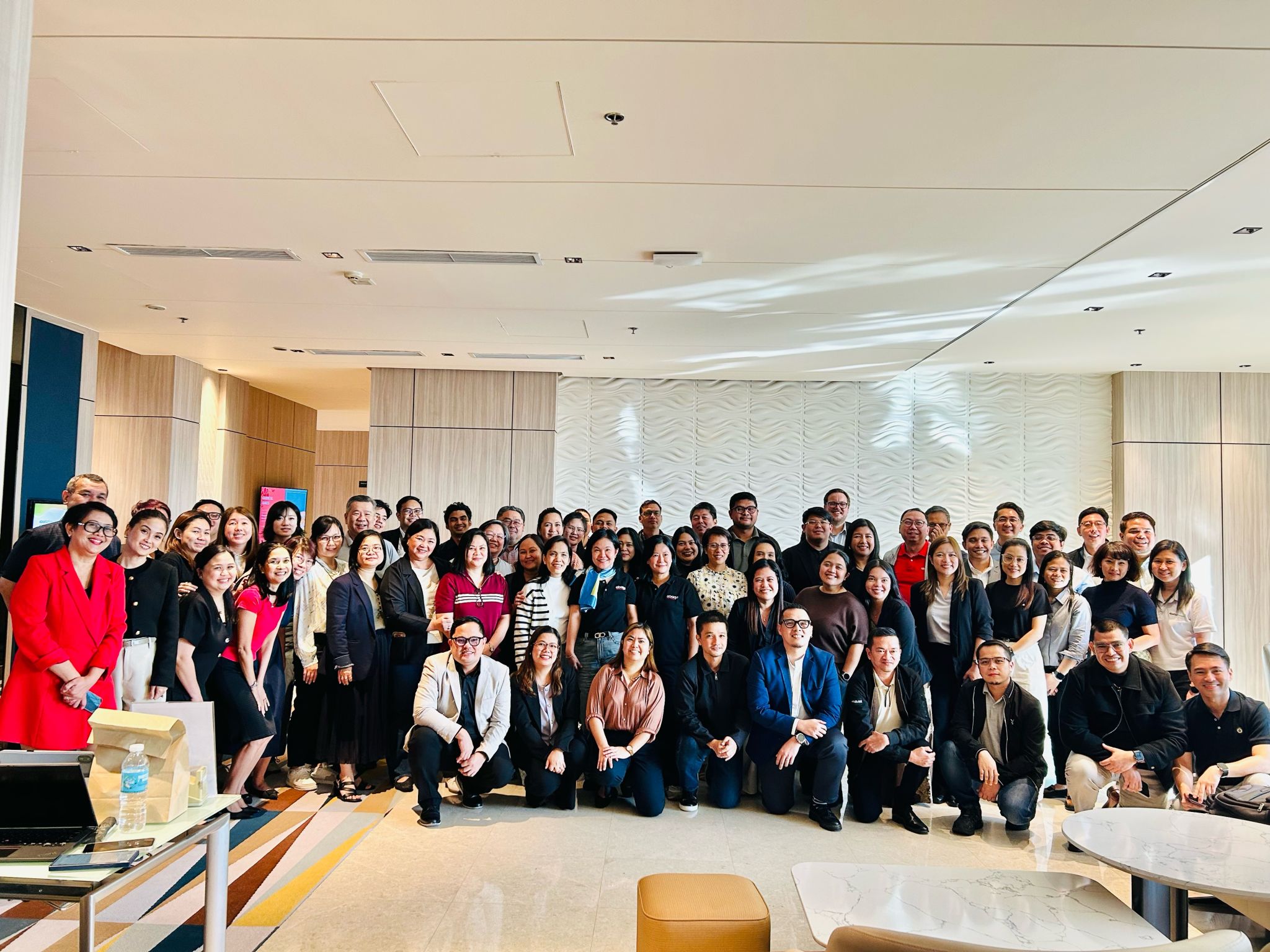
Guided by the value of “Step Up and Be Accountable,” Aboitiz Foods recently hosted its inaugural Risk Management Summit 2026. The event aimed to elevate the capabilities of over 70 team members from various departments and countries, reinforcing the principle that risk management is a shared responsibility.
The summit highlighted the importance of making informed decisions based on operational and market realities. This initiative strengthens Aboitiz Foods’ internal risk culture, further embedding the Aboitiz Value of Responsibility.
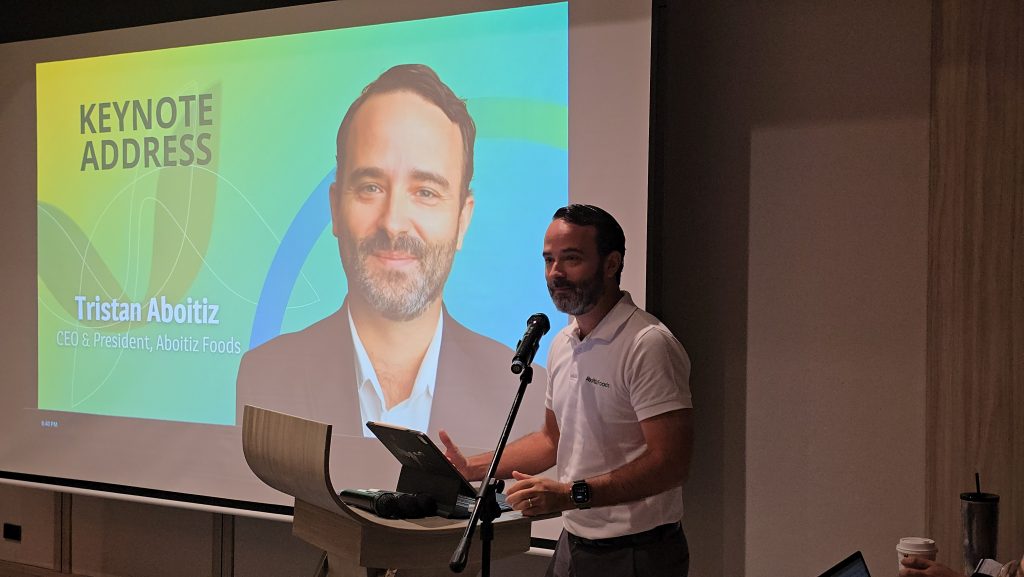
Tristan Aboitiz, President and Chief Executive Officer of Aboitiz Foods, highlighted the importance of holding the Risk Management Summit amid today’s environment. “The horizon ahead represents what Aboitiz Foods can become: more resilient, more agile, and more future-ready. This day is to strengthen the mindset, capabilities, and discipline required to step up, be accountable, and execute with confidence,” he stated.
The summit offered team members an opportunity to share experiences and learn from global experts through plenary discussions and interactive sessions on strategic shifts and sustainable growth.
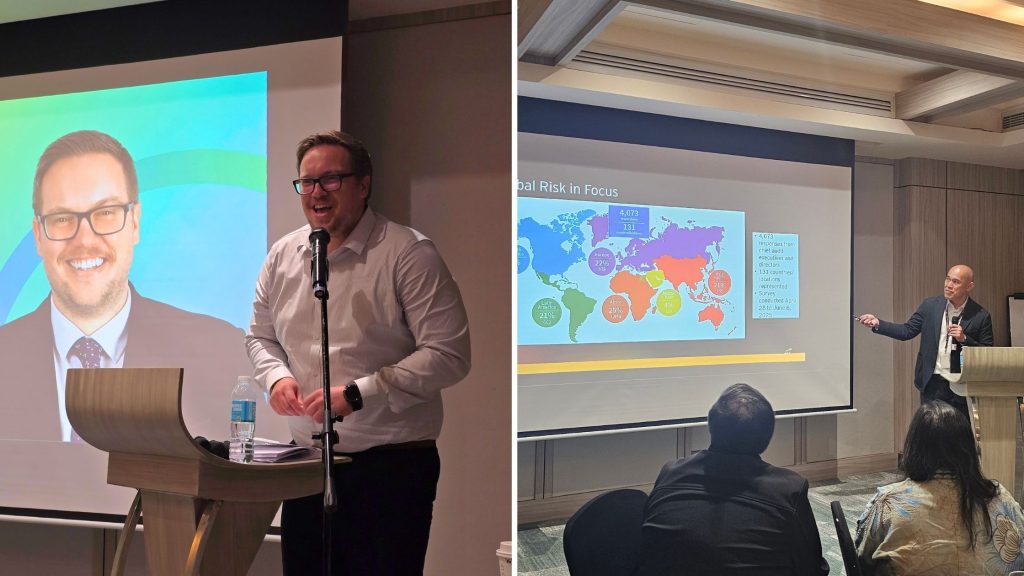
Matt Kerly, a risk consultant from AON, analyzed how global shifts affect regional strategic priorities. He emphasized that global trends—whether in trade, technology, or weather—are not merely external “noise.” Instead, they are strategic variables that must be deeply embedded into the company’s forecasting and decision-making processes.
Similarly, experts from SyCip Gorres Velayo & Co. (SGV) urged the team to move beyond “What could go wrong?” to“What could go right?” This mindset shift identifies competitive advantages within potential risks to drive sustainable growth through innovation. As Joseph Ian Canlas, Partner and Risk Consulting Leader at SGV, noted, “Sustainable growth will be achieved not just through caution, but through innovation.”
Innovation and Readiness
The Risk Management Summit served as a reminder for team members that progress goes beyond adopting new technology. As with the Aboitiz Value of Innovation, it is about thinking outside the box, trusting data-driven insights, and continuously improving day-to-day functions while striving to do Always Better.
To test this readiness, participants took part in an immersive, high-stakes simulation, focusing on digital threats in an IT-OT (Information Technology-Operational Technology) environment. Mark Anthony Javiero, Senior Director – Technology Consulting, SGV, and John Patrick Pineda, Director – Technology Consulting, SGV, spearheaded the activity, sharpening the team’s governance and crisis coordination skills under pressure.
A DNA of Risk Ownership
The summit concluded with a powerful call to action: risk ownership must extend beyond leadership and become part of the company’s DNA. As Bertrand Lim, ERM Managing Consultant at Marsh, highlighted, true resilience requires accountability at every level of the organization.
As Aboitiz Foods looks towards the future, the lessons from this summit reinforce a commitment to building a resilient organization. By fostering a culture of true ownership and staying anchored in the Aboitiz Values, the company is ready to navigate the complexities of the industry, driven by accountability and the commitment to striving to do Always Better.
“By bringing together risk champions from across Asia—representing every critical function from finance and IT to HR and supply chain—we are proving that resilience is built through collaboration, not in silos,” said Annacel Natividad, Chief Risk Officer of Aboitiz Foods. “The summit reinforced a simple truth: risk management is more than just a department; it is a shared responsibility and a collective culture.”
Pertanyaan yang Sering Diajukan
1: What is this article about?
This article covers the inaugural Aboitiz Foods Risk Management Summit 2026, which brought together over 70 team members from across departments and countries. The event focused on strengthening organizational resilience, embedding a shared culture of risk ownership, and shifting the collective mindset from risk avoidance toward identifying competitive advantages — all anchored in the company value of “Step Up and Be Accountable.”
2: What was the core mindset shift the summit aimed to achieve?
Rather than treating risk management as purely defensive — asking only “What could go wrong?” — the summit challenged participants to also ask “What could go right?” Experts from SGV emphasized that sustainable growth comes not just from caution but through innovation. Identifying competitive advantages hidden within potential risks allows organizations to turn uncertainty into strategic momentum, fostering a more proactive, opportunity-oriented organizational culture.
3: How did the summit build practical readiness against digital and technological threats?
Participants engaged in an immersive, high-stakes simulation focused on digital threats in an IT-OT (Information Technology – Operational Technology) environment. Led by technology consulting experts from SGV, the simulation was designed to sharpen governance decisions and crisis coordination under real pressure. Moving beyond theoretical frameworks, the exercise tested actual response capabilities and exposed areas for improvement in the company’s digital security and resilience infrastructure.
4: How does the summit connect to the broader Aboitiz Foods value system?
Risk management was explicitly framed as an expression of the company’s “Step Up and Be Accountable” value — the organization’s value of the year for 2026. The summit reinforced that accountability and risk ownership must extend beyond a dedicated risk department to become part of every team member’s daily mindset and decision-making. True resilience, as highlighted by the Chief Risk Officer, is built through collaboration across all functions, not in isolated silos.
5: What is the long-term significance of establishing a risk management culture across a regional organization?
For a company operating across diverse Asian markets, risk awareness cannot be centralized — it must be distributed at every level and geography. Embedding risk ownership into the organizational DNA means that when global disruptions occur — whether trade shifts, technology threats, or climate events — teams across the business are equipped to respond with informed, decisive action. This distributed resilience reduces dependency on leadership-level crisis response and accelerates recovery at the point closest to the disruption.