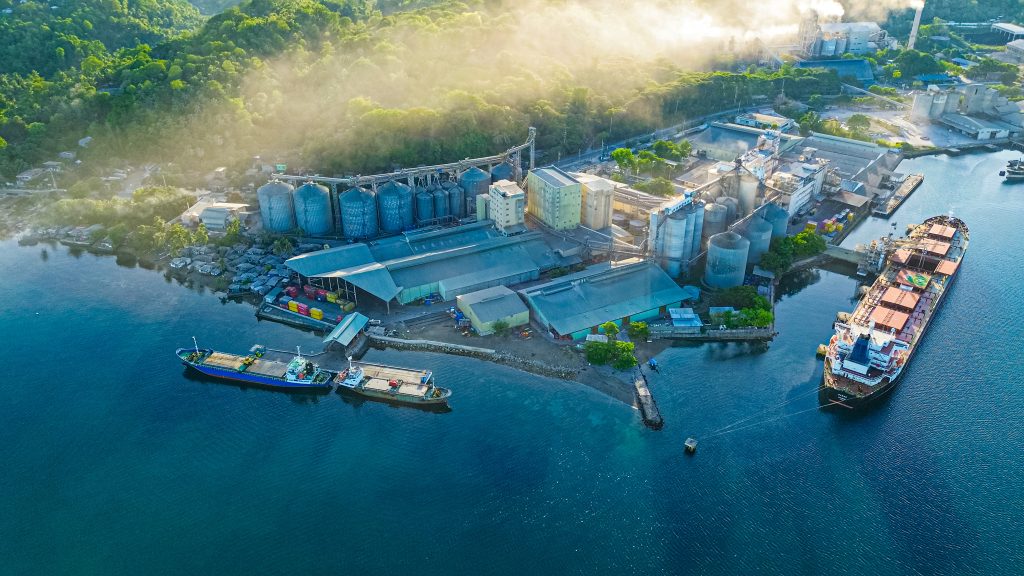
Bahan bakar dan energi merupakan faktor kunci dalam proses produksi pakan Pilmico. Panas dan uap dalam jumlah besar diperlukan untuk menciptakan produk berkualitas tinggi. Bahan bakar bunker adalah sumber daya bahan bakar yang paling umum; sayangnya, bahan bakar ini juga tidak dapat diperbarui.
Dalam upaya untuk mengurangi konsumsi, sejak November 2016 Pilmico mulai menggunakan sekam padi, produk sampingan dari penggilingan padi dari produksi beras, sebagai alternatif bahan bakar bunker. Juga berlabuh pada program Aboitiz Group, Race to Reduce, Pilmico menggunakan ini sebagai jalan untuk menjadi hijau sekaligus mengurangi biaya produksi.
Pada tahun pertama penerapannya, Pilmico mampu menghemat hampir setengah dari penggunaan bahan bakar bunkernya yang terus berlanjut hingga tahun 2018, di mana penghematan bahan bakar meningkat lebih lanjut sebesar 26%. Melalui hal ini, proses produksi perusahaan telah mengalami peningkatan yang signifikan, mengurangi penggunaan bahan bakar hingga lebih dari 60%.
Peningkatan ini hanyalah salah satu dari upaya keberlanjutan Pilmico. Pada tahun 2008, fasilitas peternakan babi Pilmico di Tarlac juga membangun dan memperkenalkan sistem biogas yang mengubah limbah babi menjadi bahan bakar untuk generator, sehingga membuat peternakan mereka menjadi swasembada untuk kebutuhan listriknya.
Melalui upaya-upaya seperti ini, hal ini menunjukkan bagaimana Pilmico terus mencari cara-cara inovatif untuk mengoperasikan bisnis menjadi lebih baik. Pilmico memajukan bisnis dan masyarakat dengan menemukan solusi yang tidak hanya berdampak pada perusahaan, tetapi juga pada masyarakat dan lingkungan.
Awalnya diposting oleh: Buletin Manila
Pertanyaan yang Sering Diajukan
What does the combination of the rice husk program and the Tarlac biogas system reveal about Pilmico’s sustainability philosophy?
The two programs together reveal a sustainability philosophy grounded in circular resource management: turning the by-products of agricultural and animal production into energy inputs for industrial operations. Rice husks from rice mills fuel the feed plant. Pig waste from the swine farm fuels the farm’s electricity. Both convert waste streams into productive resources — reducing disposal burden, lowering input costs, and shrinking the environmental footprint simultaneously. This is sustainability as operational logic rather than as public relations.
Why does feed production require such large amounts of heat and steam?
The manufacture of animal feed involves processes including pelletizing, conditioning, and drying raw ingredients — all of which require sustained high-temperature heat and steam to achieve the right texture, density, kill pathogenic bacteria, and ensure nutritional integrity of the final product. These are energy-intensive, continuous industrial processes that cannot simply be paused or run at reduced temperature. The scale of Pilmico’s feed production operations means that even modest per-unit fuel savings translate into significant aggregate cost and environmental impact.
How did Pilmico source enough rice husk to replace a meaningful share of its bunker fuel?
Rice husks are generated as a by-product of rice milling — a widely distributed agricultural activity throughout the Philippines, particularly in regions like Central Luzon and Ilocos where rice is a primary crop. Pilmico leveraged proximity to rice-producing areas to establish supply chains for rice husk collection. Because rice husks are a low-value by-product for rice mills, they are available at significantly lower cost than petroleum fuel, and their local sourcing also reduces the logistics complexity associated with bunker fuel procurement.
How does the Race to Reduce program connect to Pilmico’s rice husk initiative?
Race to Reduce is the Aboitiz Group’s sustainability program focused on reducing environmental impact across its businesses — specifically targeting energy consumption, carbon emissions, and waste. Pilmico’s rice husk fuel substitution program aligns directly with Race to Reduce’s objectives by replacing a carbon-intensive fossil fuel with a renewable biomass alternative. The initiative allows Pilmico to contribute to the Group’s environmental targets while generating measurable operational cost savings — demonstrating that sustainability and profitability are not mutually exclusive.
Is the rice husk fuel innovation unique to Pilmico or part of a broader industry practice?
Biomass fuel use in agribusiness operations is not unique to Pilmico, but its systematic implementation and documented results — including more than 60% fuel use reduction over two years — reflect a more rigorous and measured approach than incidental biomass use. By formally integrating rice husks into its fuel supply chain beginning in November 2016, Pilmico established a replicable operational model that generates consistent results rather than treating biomass as an experimental supplement to conventional fuel.