Eggs are often called nature’s “perfect protein.” They are a staple in pantries worldwide and a vital ingredient in numerous recipes. However, choosing the right eggs can be overwhelming. With various pack sizes and differences in shell and yolk colors, how can you determine which eggs are best for your family?
Let’s debunk the two most common myths that often scramble a consumer’s decision.
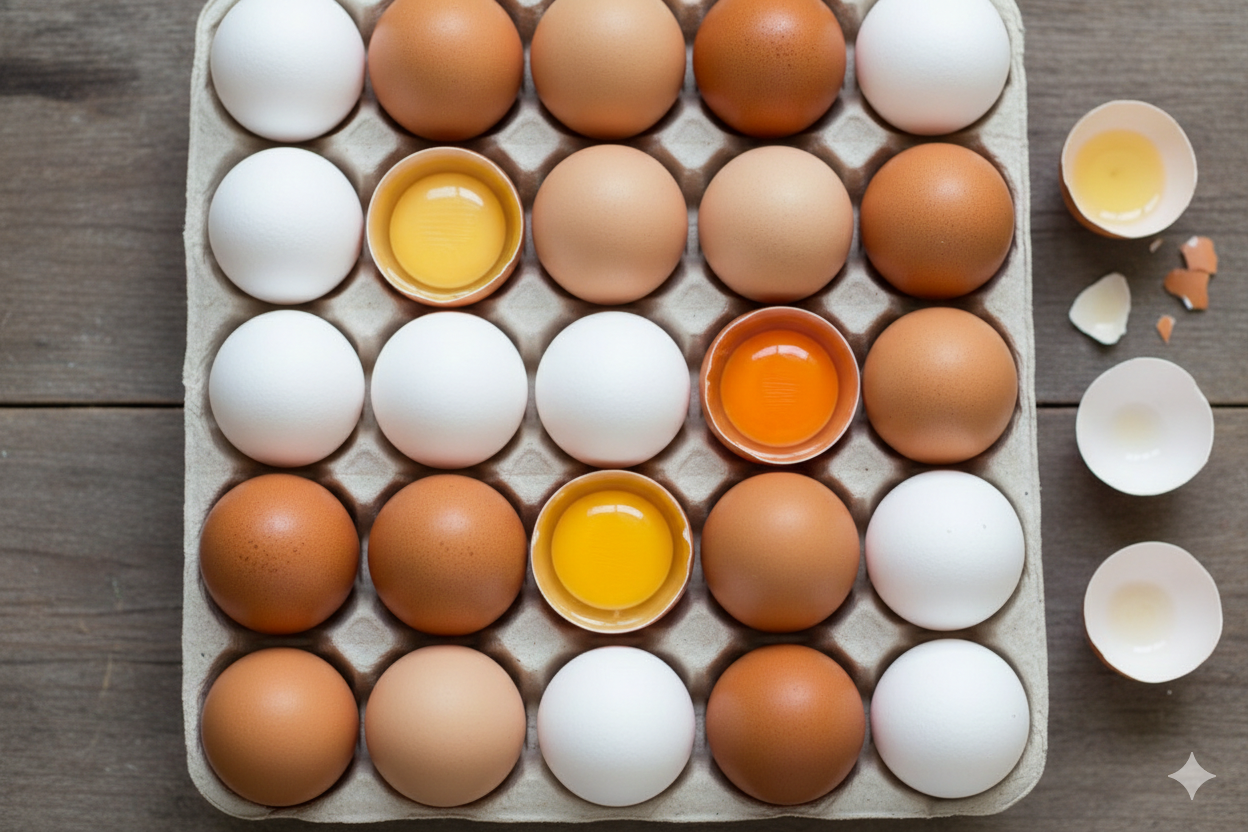
Myth No. 1: The Shell Color Debate (Brown vs. White)
The Myth: “Brown eggs are healthier, more ‘farm-fresh,’ or more organic than white eggs.”
The Science: The color of an eggshell is primarily determined by the breed of the hen.
Typically, red-feathered hens, such as Rhode Island Reds, lay brown eggs while white-feathered hens, such as White Leghorns, lay white eggs.
Another factor that affects eggshell color is history, tradition, and cultural references. Consumer preference can be based on which strains of layers were first introduced into a country or region. For example, white eggs are predominantly available in the North American market, as they are in the Philippines. On the other hand, Southeast Asian countries primarily have brown eggs.
Interestingly, all eggs actually start white! For brown-laying breeds, a natural pigment is secreted onto the shell just before it is laid. Nutritionally, white and brown eggs are identical, and neither is “more natural” than the other. The difference in color is simply a matter of “nature’s choice” in packaging.
If you are looking for specific nutritional boosts, look at the label rather than the shell. For example, eggs labeled “Omega-3” come from hens fed a specialized diet high in flaxseed, resulting in a higher fatty acid content.
Myth No. 2: The Yolk Color Mystery (Pale Yellow vs. Deep Orange)
The Myth: “A darker yolk is more nutritious or ‘real’ than a pale one.”
The Science: Yolk color is primarily determined by the yellow-orange pigments (carotenoids) found in a hen’s feed.
Remember, a darker yolk doesn’t automatically mean the egg is “better” than a lighter one from a different farm. To understand yolk color, we have to look at two main factors:
- The “Menu”: Different feed programs result in different colors. A hen fed mostly wheat or barley will naturally produce a pale yellow yolk, while a hen eating corn or marigold-enriched feed will produce a golden or orange yolk, but both are still equally nutritious.
- The Health Connection: Here’s where it gets interesting—yolk color can be an indicator of a hen’s digestive health, but only when looking at chickens from the same flock eating the same feed.
The Science of Yolk Color: What It Really Indicates: According to Jethro Avila, Layer Manager at Pilmico Farms, if two hens in the same flock eat the same amount of pigmented feed but produce different yolk colors, it could indicate that one hen has a digestive issue preventing her from absorbing those nutrients properly. Regardless of the shade, the protein and fat content remain largely the same. A vibrant yolk is a sign of a well-fed hen, but a pale yolk is still a nutritional powerhouse.
Understanding these differences is just the first step. At Aboitiz Foods, we take the mystery out of nutrition by controlling what our hens eat, ensuring that what ends up on your table is of the highest quality.
From Farm to Table: The Aboitiz Foods Standard
Our commitment to “Building Expertise for Quality” is at the heart of everything we do at Aboitiz Foods.
Through our producer brands, Pilmico and Gold Coin, our team of experts formulates feeds that ensure hens receive a balanced, nutrient-rich diet. This guarantees that every egg—regardless of its shell or yolk color—is packed with the essential vitamins and minerals your family deserves.
At Pilmico Farms, we guarantee that our eggs are safe and fresh for our customers by adhering to strict quality and food safety measures. Our state-of-the-art layer farm is equipped with a fully automated egg collection and packing facility, ensuring we produce superior quality, farm-fresh eggs that do not contain hormones and antibiotic residues.
The Bottom Line
Don’t let the “shell game” confuse you. Whether the exterior is brown or white, or the interior is lemon-yellow or sunset-orange, you are getting a complete source of macronutrients, vitamins, and minerals.
The next time you visit the market, shop with confidence knowing that the best egg is a fresh egg from a source you trust.
Frequently Asked Questions
1: What is this article about?
This article debunks two widely held egg myths: that brown shells are healthier than white ones, and that a darker yolk is more nutritious than a paler one. Using food science and expert input from a layer farm manager, it explains the true factors behind shell and yolk color, and establishes what actually matters when choosing high-quality eggs — sourcing transparency, proper feed formulation, and rigorous food safety standards at the farm.
2: Does eggshell color — brown vs. white — indicate nutritional quality?
No. Eggshell color is determined entirely by the breed of the hen — not by its diet, farming method, or health status. Red-feathered breeds like Rhode Island Reds typically lay brown eggs, while white-feathered breeds like White Leghorns lay white ones. All eggs start out white; a pigment is applied by brown-laying hens just before laying. Nutritionally, white and brown eggs are identical. Regional differences in prevalence are due to which hen breeds were historically introduced to a given market.
3: Does a darker egg yolk mean the egg is more nutritious?
Not necessarily. Yolk color is primarily determined by the carotenoid pigments in a hen’s feed. A hen fed corn or marigold-enriched feed will produce a deeper orange yolk, while one fed wheat or barley will produce a pale yellow yolk — but both are nutritionally equivalent. Yolk color can serve as a health indicator within the same flock on the same feed, where inconsistencies may signal a digestive issue in individual hens. Across different farms or feed programs, yolk color alone does not measure nutritional value.
4: What should consumers actually look for when choosing eggs?
Rather than judging by shell or yolk color, consumers should prioritize sourcing from farms that control feed quality, enforce strict biosecurity, and follow rigorous food safety protocols. Nutritional specialization — such as Omega-3 enrichment — is indicated on the label, not visible from the egg’s appearance. A fresh egg from a trusted, transparent source is consistently the best choice, regardless of whether the shell is brown or white or the yolk is pale yellow or deep orange.
5: How does farm-to-fork quality control ensure egg safety and consistency?
A comprehensive farm-to-fork approach involves expert-formulated feeds designed to deliver consistent nutrition to laying hens, automated egg collection and packing systems that minimize handling and contamination risks, continuous monitoring of flock health and production standards, and strict adherence to food safety protocols that ensure eggs are hormone-free and free from antibiotic residues. This end-to-end quality control means consumers receive a product that is nutritionally complete, safe, and reliably fresh regardless of external appearance.