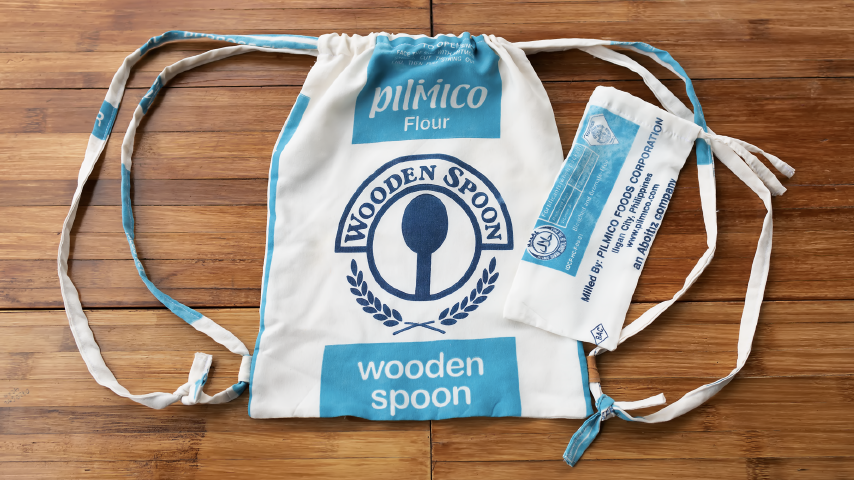
Pilmico Foods Corporation (Pilmico) has been in the flour manufacturing industry for 60 years. Aside from its high-grade quality flour, Pilmico is also known for its brightly colored flour sacks made with katcha, which helps maintain the quality of the products.
Throughout the years, Pilmico puts used sacks from its dealers and partner bakeries into better use as they partnered with several non-profit organizations and sewing cooperatives to upcycle these for various corporate social responsibility (CSR) initiatives.
Kutitap Care Package
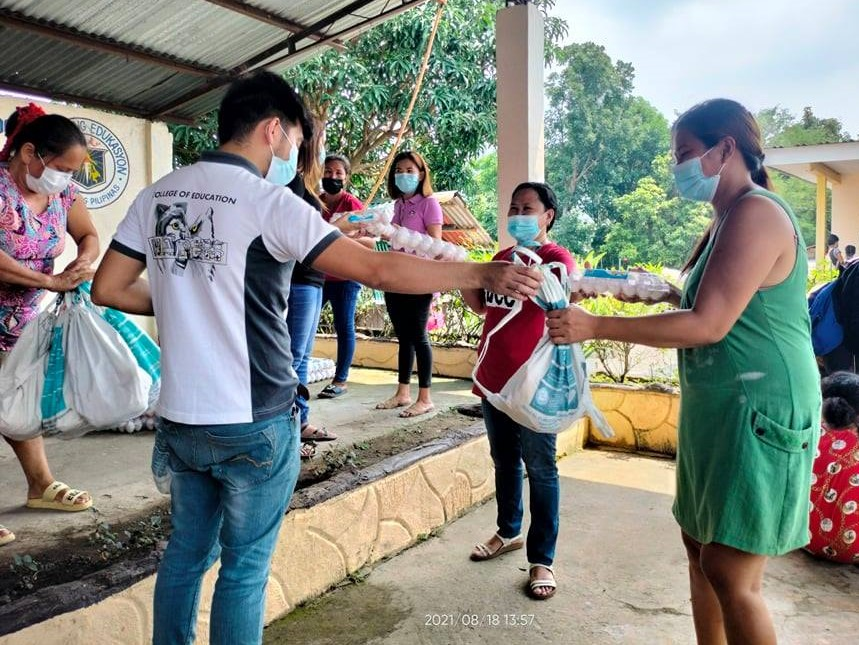
The ‘Kutitap Care Package’ is a spin-off of the annual Kutitap Feeding Program previously held by Pilmico and KINDER by Aboitiz Foundation, Inc. (AFI). In 2021, students from Bueno Integrated School in Capas and Malasa Integrated School in Bambam, Tarlac received freshly baked bread and eggs. Thirteen pieces of bread from Pilmico’s partner bakery, Norms Chaves of Norlyn’s Bakery, and 12 large eggs from Pilmico farms were packed in upcycled Pilmico flour sacks. The sacks were turned into multi-purpose drawstring bags for the students to use for school or for their everyday needs.
Reusable Face Masks
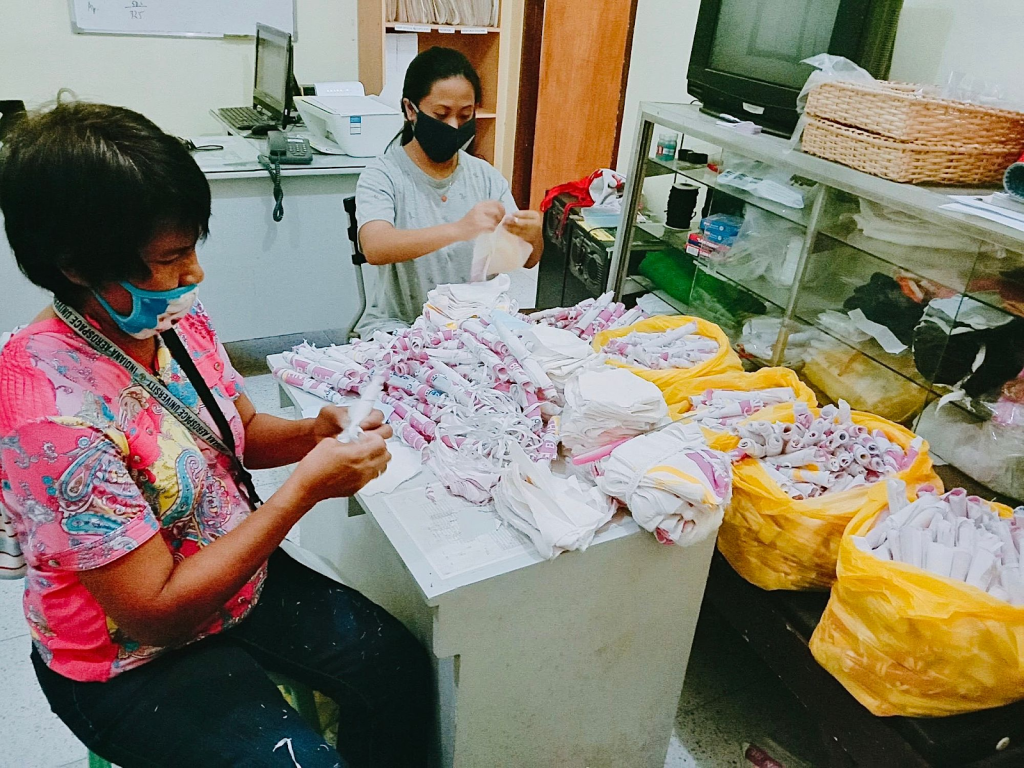
The height of the pandemic also saw the strong ‘Bayanihan’ spirit from various sectors. For Pilmico, they partnered with seamstress cooperatives and Mask4AllPH, a volunteer organization that distributed free facemasks.
In 2020, Pilmico tapped 30 seamstresses in Taguig and Cebu City to make upcycled reusable face masks. The initiative produced over 50,000 face masks that were distributed to Pilmico customers, employees, and partner communities.
Aside from this, Pilmico turned over 23,000 pieces of flour sacks which were upcycled into 160,000 reusable face masks through the Mask4AllPH initiative.
The project ensured the masks passed all the standards that the Philippine General Hospital recommended.
CORA Philippines Partnership
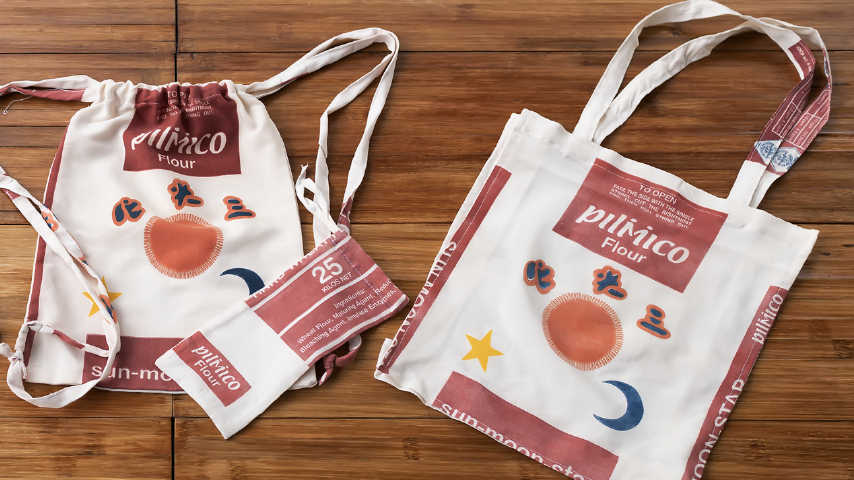
In July 2021, Pilmico collaborated with Aboitiz Foundation and CORA Philippines, a non-profit organization dedicated to sustainable programs. The enterprise and development initiative aims to upcycle used Pilmico flour sacks through the help of CORA. The program’s objectives are to provide capacity and skills training to the target beneficiaries and equip them with sustainable and long-term livelihoods within their communities.
Pilmico puts primary focus on maintaining the highest standards for its products, especially flour, through the use of quality packaging. At the same time, by upcycling these sacks, they fulfill a greater purpose of contributing to sustainability.
Frequently Asked Questions
How does the upcycled flour sack program contribute to Pilmico’s own sustainability targets?
By diverting used flour sacks from disposal into a productive use stream, Pilmico reduces its operational waste output — contributing directly to the Aboitiz Group’s Race to Reduce environmental program targets. Unlike donations that are one-directional, this program generates ongoing waste reduction through a sustained operational mechanism rather than a one-time activity. Each cooperative partnership sustained means a continuous stream of flour sacks diverted from disposal — compounding the environmental benefit the longer the program runs.
What is the Flour Sacks to Bags upcycling initiative and who produces the products?
Pilmico’s Flour Sacks to Bags initiative collects used flour sacks from its production operations and distributes them to partner sewing cooperatives — primarily women’s cooperatives in the NCR and Visayas regions — who upcycle the sacks into usable products including shopping bags, face masks, and fashion accessories. The initiative connects Pilmico’s waste stream directly to a livelihood production pipeline for marginalized women, converting what would otherwise be disposed material into income-generating raw material.
How does this initiative relate to the Masked Hope program from the ECQ period?
The Flour Sacks to Bags sustainability program is the institutionalized, peacetime evolution of the Masked Hope initiative launched during the COVID-19 ECQ. During the ECQ, Pilmico pivoted urgently to distribute used flour sacks to sewing cooperatives to produce face masks — both addressing frontliner protection needs and providing crisis-period livelihood. The post-pandemic sustainability program formalizes this relationship into an ongoing circular economy model rather than allowing it to lapse when the emergency passed.
What sustainability principles does the flour sack upcycling program embody?
The initiative embodies three overlapping sustainability principles simultaneously. Waste reduction: used flour sacks that would otherwise enter a disposal stream are diverted into a productive supply chain. Livelihood creation: the diverted material becomes raw material for a women’s cooperative enterprise, generating income from what had been waste. Consumer education: branded upcycled products carry the story of their origin, raising awareness about circular economy practices among the end buyers of the finished goods.
Who are the cooperative partners in the program and what does the partnership provide them?
The program works with women’s sewing cooperatives — including some of the same partners from the Masked Hope ECQ initiative — who receive used flour sacks from Pilmico at no cost. The cooperatives design and produce the finished goods, retaining the proceeds from sales. Pilmico’s contribution is the raw material supply, brand visibility, and in some cases a guaranteed purchase commitment for finished products. This structure gives the cooperatives a reliable, zero-cost input stream that directly improves their unit economics.