MANILA, Philippines — Demonstrating steady progress in its sustainability journey, Aboitiz Foods, the food and agribusiness arm of the Aboitiz Group, surpassed the Philippines’ Extended Producer Responsibility (EPR) Law plastic recovery targets by more than 300% in 2024. The company recovered the equivalent of 326.42% of its rigid plastic footprint and 63.8% of flexible plastics, well above the government’s 40% recovery target for that period.
This success is part of its broader commitment to responsible business, driven by its #everymeal advocacy to create a positive impact across every stage of the value chain, from mill to meal. From responsible sourcing and sustainable packaging to community engagement and environmental stewardship, #everymeal reflects how the company strives to nourish people, animals, and communities in a more responsible and sustainable way.
“Our purpose goes beyond business,” said Annacel Natividad, Chief Risk Officer at Aboitiz Foods. “This progress reflects our commitment to doing things right and always striving to do better. #everymeal is our ongoing promise to produce food and feed responsibly. We’re proud that our efforts are not just ticking boxes, but creating real, lasting impact in the way we operate.”
Rethinking packaging and driving results
Aboitiz Foods prioritized packaging reform as a key strategy. This strategy is closely aligned with the Philippines’ EPR Law, which mandates companies to be responsible for the proper and environmentally sound management of their product packaging throughout its lifecycle, particularly after consumption.
Packaging remains the largest source of plastic use across Aboitiz Foods’ operations, covering a wide range of products from animal feeds to flour. In recent years, Aboitiz Foods has taken deliberate steps to reduce its packaging footprint by introducing lighter packaging using 20% less plastic, shifting to bulk formats in some product lines, and implementing bulk truck loading systems across several feed mills in the Philippines.

from animal feeds to flour, making it a key focus for sustainability efforts.
Take, for example, soybean meal, the second-largest raw material in Aboitiz Foods’ feed production. Previously transported entirely in bags, it is now loaded directly onto trucks using fixed pipes or recycled one-ton tote bags. This shift significantly reduces single-use packaging, saves thousands of woven bags each year, and improves operational efficiency.
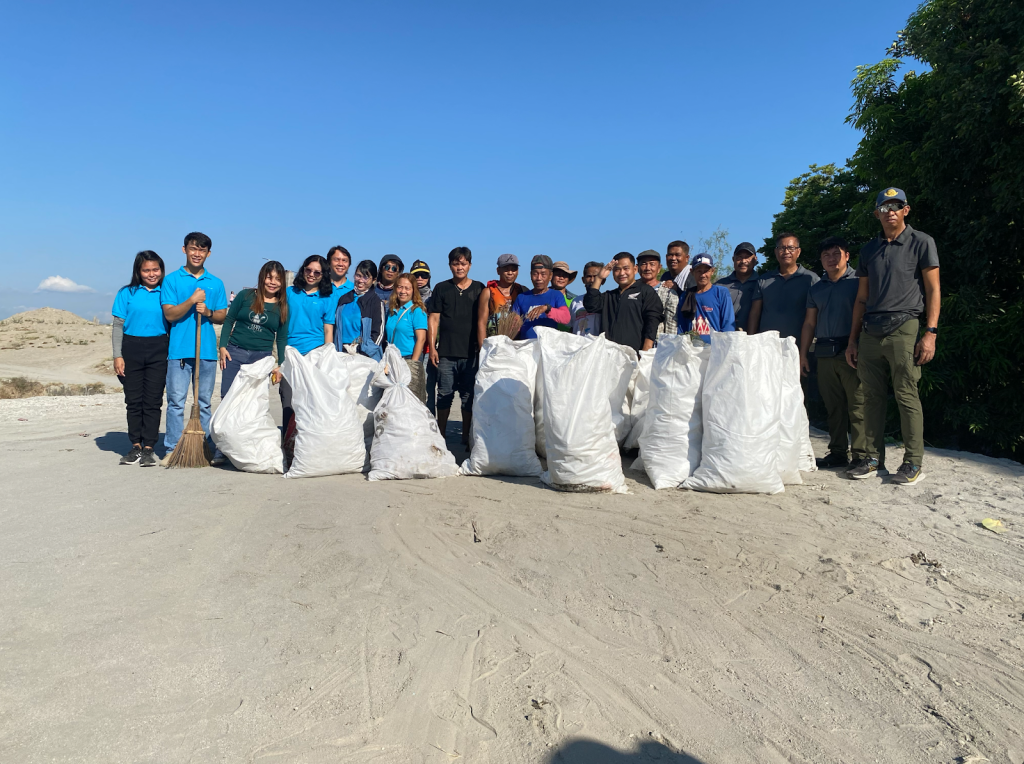
Beyond packaging, Aboitiz Foods repurposes used packaging into unique items like bags, aprons, pouches, and shirts, giving materials a second life while engaging employees and communities in sustainability efforts.

One example of how Aboitiz Foods gives new life to packaging materials
At the same time, the company is making steady progress in renewable energy, reforestation, and waste reduction. In 2024, Aboitiz Foods planted over 7,600 trees, generated more than 16.2 million kilowatt-hours of solar energy, and produced over 10.3 million tons of biomass. It also reused, upcycled, or properly disposed of 1,100 metric tons of plastic, and achieved more than USD 165,000 in savings through waste reuse initiatives.
Scaling sustainability beyond borders
While this significant progress in plastic recovery was measured in the Philippines, Aboitiz Foods views it as a strong foundation for its broader, long-standing commitment to responsible packaging and resource management across all its markets. With operations across Asia, including in Vietnam and China, the company has long been exploring and implementing packaging and recovery strategies, and is now identifying ways to tailor and replicate these efforts across different regulatory environments.
At Gold Coin Feed Dongguan, the team launched a recycling program that transforms used packaging waste into valuable resources, diverting 211 metric tons from landfill in 2024 alone. This initiative also provides a steady income for low-income community members, reinforcing Aboitiz Foods’ commitment to advancing the circular economy and social impact across its Asian operations.
“Our teams throughout Asia are identifying the most relevant sustainability opportunities for their local operations and communities,” explained Natividad. “At the same time, we’re building stronger internal systems to monitor, track, and eventually scale these efforts. It’s a long road, but this milestone gives us a strong foundation.”
Plastic pollution remains a critical global issue, with the Philippines among the top contributors to ocean-bound plastic waste. By exceeding national EPR targets and embracing circular economy principles, Aboitiz Foods is playing its part in evolving industry standards.
With the EPR Law’s targets rising to 80% by 2028, Aboitiz Foods is doubling down on its commitment to act responsibly and make steady progress.
“More than compliance, this progress is about taking responsibility,” added Natividad. “We’re doing our part to manage what we produce and to ensure it does not end up harming the communities and ecosystems we are part of.”
Frequently Asked Questions
Does Aboitiz Foods’ sustainability work extend beyond the Philippines?
Yes. While the 2024 EPR performance was measured in the Philippines, similar efforts are ongoing across Asian operations. At Gold Coin Feed Dongguan in China, a packaging recycling program diverted 211 metric tons from landfill in 2024 alone and also provides income for low-income community members. The company is actively identifying ways to adapt and scale these initiatives across different regulatory environments.
What is the Philippines’ Extended Producer Responsibility (EPR) Law and why does it matter?
The EPR Law requires companies to take responsibility for the proper environmental management of their product packaging throughout its entire lifecycle – including after consumer use. It sets mandatory plastic recovery targets that increase over time, compelling businesses to reduce, recover, and repurpose packaging waste rather than allowing it to enter landfills or the environment.
How did Aboitiz Foods perform against the 2024 EPR plastic recovery targets?
In 2024, Aboitiz Foods recovered the equivalent of 326.42% of its rigid plastic footprint and 63.8% of its flexible plastics – both figures well above the government’s 40% recovery requirement for that year. The company attributes this outcome to deliberate packaging reforms and waste management strategies implemented across its Philippine operations.
What specific packaging changes did Aboitiz Foods implement to reduce plastic use?
Key changes include introducing lighter packaging using 20% less plastic, shifting certain product lines to bulk formats, and deploying bulk truck loading systems across feed mills. Soybean meal, previously transported entirely in woven bags, is now loaded via fixed pipes or reusable one-ton tote bags, significantly cutting single-use packaging each year.
How does Aboitiz Foods give used packaging materials a second life?
Beyond recovery, the company repurposes used packaging into functional items such as bags, aprons, pouches, and shirts. This circular approach extends material use, engages employees and communities in sustainability, and directly supports the principles of a circular economy – reducing waste while creating tangible community value.