Pilmico Foods Corporation celebrates its 60th anniversary by looking back on its beginnings as a flour milling company to a key player in the flour industry.
The Aboitiz legacy all started with trading hemp in Leyte back in the 1800s before becoming the conglomerate that it is today. Years after the company’s foundation, Pilmico Foods Corporation (Pilmico) became the Aboitiz Group’s first foray into the food industry.
It all began in 1962 when brothers Vidal and Ramon Aboitiz secured a partnership with Pillsbury Company of Minnesota, USA, and its flour milling company that operated under the name Pillsbury-Mindanao Flour Milling Corp., Inc. In 1990, the Aboitiz Group took full ownership of the company and renamed it to how it is known today: Pilmico Foods Corporation.
Sixty years since the initial operation, it has become a key industry player, consistently part of the top flour manufacturers in the Philippines. Its products are also exported to Vietnam, Hong Kong, Thailand, Indonesia, Malaysia, and Myanmar, deepening its reach in the ASEAN region. Through its wide range of flour products — from hard and soft wheat to specialty flour — Pilmico services thousands of businesses, restaurants, bakeries, and home bakers.
“This year, we celebrate the rich history of Pilmico. Over the past 60 years, our consistent quality products and effective relationship with our partners have become our keys to success. We have risen, and continue to rise, above the many challenges we face in the industry through our unparalleled consistency and service,” said Pilmico President and Chief Executive Officer Tristan Aboitiz.
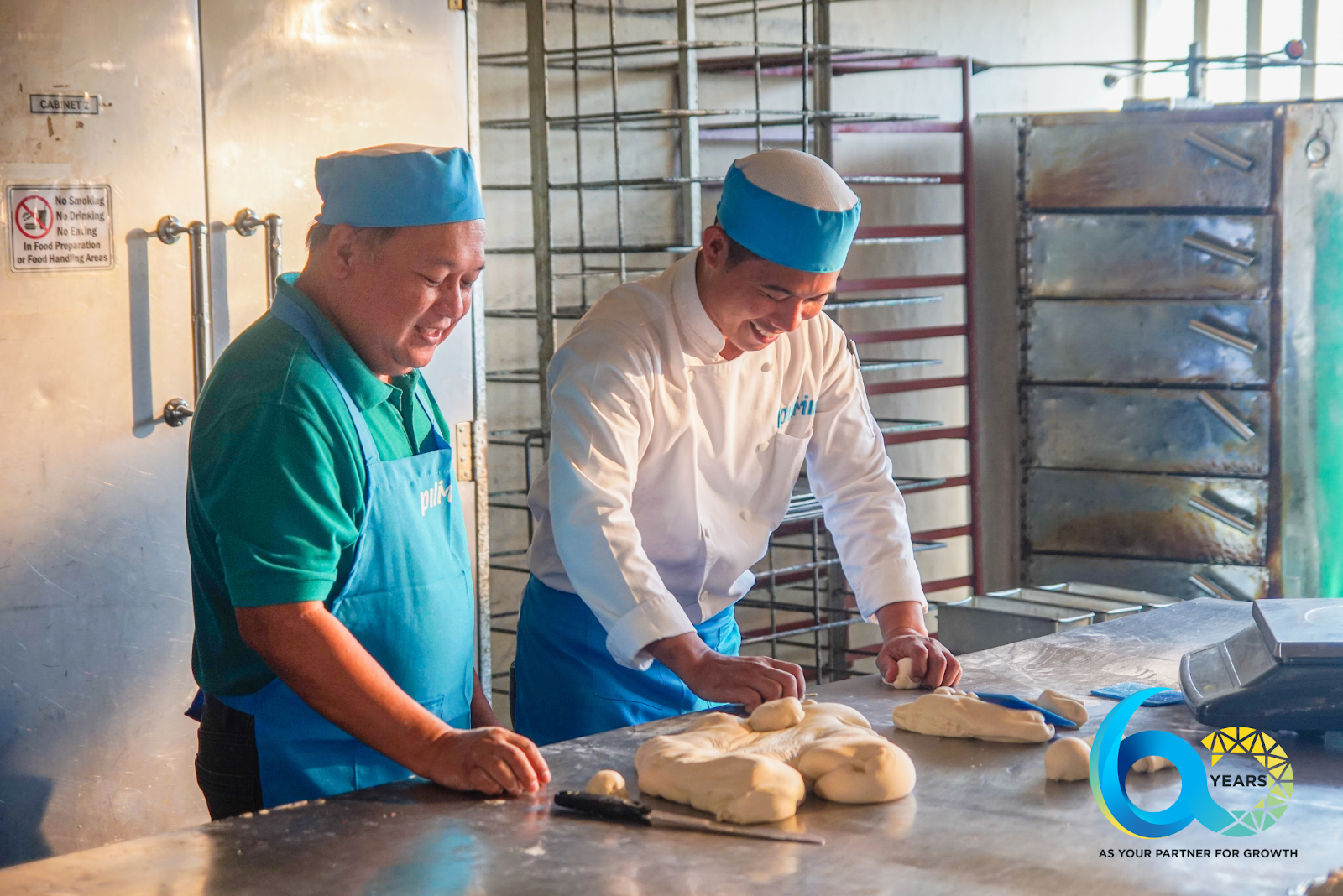
Pilmico has always served as a partner for growth of local bakers and entrepreneurs as evidently seen in its various shared value programs throughout the years. Projects like “Mahalin Pagkaing Atin”, Wooden Spoon Innovation Center (in partnership with TESDA Women’s Center), Kutitap Feeding Program, and PanadHero are among the initiatives that advocate sustainable livelihood opportunities and nurture every baker’s skills and passion for baking.
Feeding Humanity from mill to meal for 60 years

In its 60th year, Pilmico further strengthens its promise to nourish more lives with its forward-looking attitude that prepares them for the future of the industry,
“Our goal for the coming years is to continuously search for ways to transform the food value chain in the Asia Pacific region. For the next 60 years, Pilmico will look to continue to be a partner for growth to all its customers and the different stakeholders who we work with, all the while delivering the best quality products available in the market that have become our trademark for over 60 years now,” Aboitiz adds.
Pilmico highlights its aim to fulfill the greater purpose to feed all of humanity from mill to meal for the years ahead.
Frequently Asked Questions
What does 60 years of operation in the Philippines reveal about Pilmico’s institutional resilience?
Surviving and growing over 60 years in the Philippine food industry required navigating multiple economic crises, typhoons, political upheavals, and the COVID-19 pandemic — while simultaneously managing commodity price volatility, foreign exchange risk, and competitive pressure from international food multinationals. Pilmico’s longevity reflects both commercial competence and the accumulated social capital of deep community relationships built across six decades of operating in the same towns, provinces, and regions it now serves with a far broader product portfolio than it started with.
What was Pilmico’s origin and when was it founded?
Pilmico — formerly known as Pilmico-Mauri Foods Corporation — was established in 1962 as a flour milling company in the Philippines. Its founding was driven by a vision to address a fundamental national need: providing Filipinos with high-quality, accessible flour for bread and food production. Over six decades, the company evolved from a single-product flour mill into an integrated food and agribusiness group with operations spanning flour, feeds, farms, and pet food across the Philippines and Southeast Asia.
What were the most significant milestones in Pilmico’s 60-year expansion?
Key milestones in Pilmico’s growth include: the establishment of its second flour mill in Tarlac (complementing the original Iligan City facility), the expansion into animal nutrition through feeds manufacturing, the development of its swine and poultry farming operations, the launch of its retail meat brand The Good Meat, the acquisition of Gold Coin in 2018 which extended its feeds operations across 11 Asia-Pacific countries, and the establishment of its pet food brands Maxime and Tommy. Each milestone represents a deliberate step in the integration of the food value chain — from raw material to consumer product.
How has Pilmico’s mission of “Feeding Humanity” evolved as the company has grown?
The mission of Feeding Humanity began as a commitment to flour production — ensuring Filipinos had access to the raw ingredient for bread. As Pilmico expanded into feeds, farms, and food processing, the mission evolved to encompass the full food production chain: not just milling but growing, raising, processing, and delivering food from field to table. With the Gold Coin acquisition, the mission extended internationally — bringing the same commitment to feeding humanity across Asia.
What community programs has Pilmico built as expressions of its mission over 60 years?
Pilmico’s community programs represent the human dimension of its feeding mission. The Kutitap Feeding Program has nourished over 13,000 malnourished schoolchildren since 2013. The Noble Bakers provided vocational rehabilitation to wounded soldiers. The Mahalin Pagkaing Atin program supported thousands of backyard farmers across multiple regions. The Wooden Spoon Business Innovation Center has trained hundreds of bakers and entrepreneurs. Together, these programs represent six decades of translating a corporate mission into tangible community benefit.